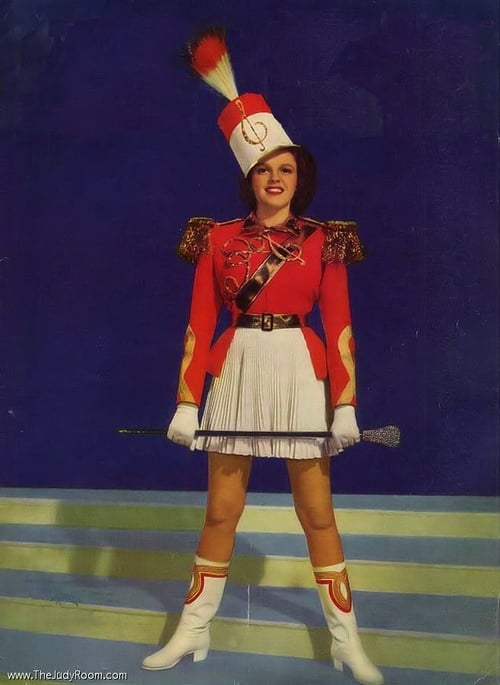
We Must Have Music
1942
No user ratings available yet
Representation score: 0.5 out of 10
Representation Score
Minimal
1942
Director
LeRoy Prinz
Runtime
20 minutes
Average Rating
No ratings yetNew Showbiz Analysis
The film opens on a stage, immediately establishing the vaudeville world as a space of glamour and professional hierarchy. LeRoy Prinz’s 1942 documentary-musical hybrid uses impersonators and contemporary performers to reconstruct the history of the form, framing the era through the lens of nostalgia and admiration. The camera loves the performers: Eddie Garr is lit as the earnest, rising hero, while Eleanor Parker is presented as the sophisticated, established icon. This dynamic sells a vision of meritocracy where talent and charm are the primary currencies of success, and the romantic or professional tension between the young man and the mature woman is resolved in favor of stability and mutual respect. The sold meaning is one of cultural preservation: vaudeville is treated as a wholesome, stable institution where the young prove their worth to the old, and the old validate the young. There is no friction with the system; the stage is a safe harbor where traditional gender roles are performed with grace. The woman is not a prize to be won but a partner to be admired, yet her value is still tethered to her glamour and status. The man’s journey is one of professional maturation, rewarded by the acceptance of the established order. The ending reinforces this moral verdict: the persistence of the young performer and the stability of the established star are both affirmed. The film does not challenge the hierarchies of the era but celebrates them, offering a polished, conventional portrait of American entertainment history. It is a light, untroubled look at the past, where the only conflict is the gap between experience and potential, and the resolution is a harmonious blend of both. The last image is a tribute to the art form, leaving the audience with a sense of closure and appreciation for the performers who kept the stage alive.
Category Breakdown
Absent. The narrative relies on heterosexual pairing between the young comedian and the established star. No same-sex intimacy or queer identity is depicted or implied in the vaudeville setting.
Limited. Eleanor Parker is billed as the glamorous, mature "Colleen," serving as the established icon, while Eddie Garr is the earnest, rising talent. The dynamic frames the woman as a partner in performance rather than a prize, yet the camera’s admiration for her beauty and status reinforces traditional gendered aesthetics of the era.
Absent. The cast and vaudeville context are exclusively white, reflecting the homogeneous reality of 1940s American stage entertainment. No non-white performers or racial dynamics are present to challenge or complicate the historical setting.
Present. The film treats the vaudeville era as a nostalgic, meritocratic space where talent and charm determine success. Traditional institutions of entertainment are portrayed as stable and rewarding, with no critique of the class structures or labor conditions within the theater world.
Absent. No characters with physical or cognitive impairments appear. The focus remains entirely on the physical performance and charisma of the able-bodied leads, offering no representation of disability in the artistic context.
Present on Screen
Limited or Absent
Official Synopsis
A narrator provides very brief info on the beginnings and history of Vaudeville while Vaudeville acts are staged by impersonators and contemporary performers.
1942
1938
1943

1994
2020
1976
1951
1997
No reviews yet. Be the first to share your thoughts on this movie!
Use the rating form above to leave a star rating and optional review.