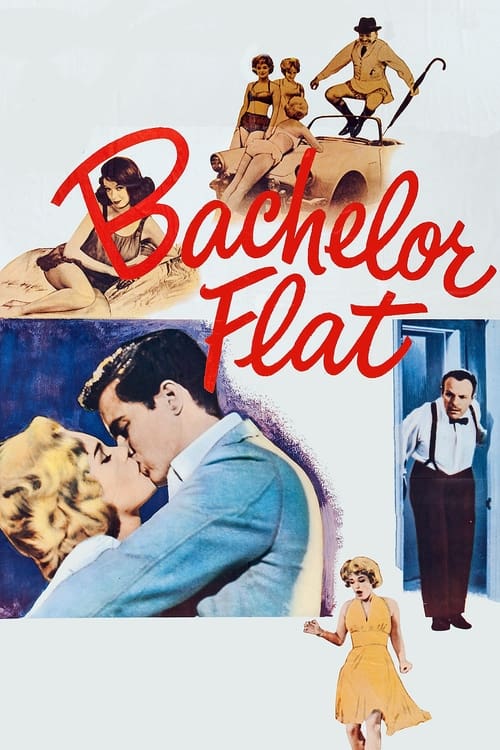
Bachelor Flat
1961
No user ratings available yet
Representation score: 0.4 out of 10
Representation Score
Minimal
1958
Director
Blake Edwards
Runtime
92 minutes
Average Rating
No ratings yetNew Showbiz Analysis
This 1958 comedy operates as a conventional mid-century romantic comedy. It relies heavily on established social hierarchies and traditional formulas, offering very little disruption to the prevailing cultural or gender norms of the era. The narrative structure centers on a framework oriented toward straight relationships, with the plot driven by male interest in a female lead. While the protagonist demonstrates some independence, the power dynamics remain rooted in the period's standard social structures. Overall, the film reflects the transitional period of Hollywood production codes, where social commentary is limited and the cast and setting remain largely homogeneous.
Category Breakdown
The film does not include any LGBTQ+ characters or narratives. The plot revolves around a traditional romantic pursuit between a female protagonist and two male suitors.
Janet Blake plays a significant role in driving the story by navigating professional boundaries and making independent decisions. However, the narrative relies on familiar formulas centered around mid-century gender roles.
The film appears to follow conventional 1950s casting patterns. There is no evidence of diverse casting or efforts to disrupt demographic norms.
The story reinforces mid-century Western social structures, focusing on individual romance and professional hierarchies rather than critiquing institutional authority.
There are no visible or invisible disabilities portrayed within the primary character arcs.
Present on Screen
Limited or Absent
Official Synopsis
Janet Blake leaves a party when her boss drunkenly makes passes at her and is offered a ride to the subway with Bill Tremaine. When she thinks Bill is making advances too, she flees into a rainstorm and ends up at the house of his neighbor, retired actor Preston Mitchell. Preston hires her as his secretary, and soon both men are pursuing Janet.
1961
1948

1956
1959
1958

1972

1950
1958
No reviews yet. Be the first to share your thoughts on this movie!
Use the rating form above to leave a star rating and optional review.