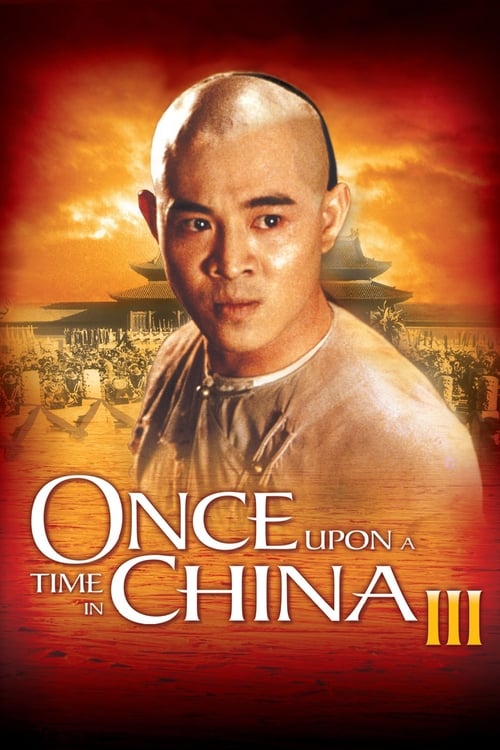
Once Upon a Time in China III
1993
No user ratings available yet
Representation score: 3.3 out of 10

Representation Score
Good
1992
RDirector
Tsui Hark
Runtime
92 minutes
Average Rating
No ratings yetNew Showbiz Analysis
Tsui Hark’s action feature succeeds as a sophisticated study of political instability in 1930s China. It excels by centering a diverse range of social classes and political identities, offering a culturally specific perspective that avoids Western-centric clichés. However, the film remains constrained by the patriarchal norms of its setting and genre. Gender representation is secondary to male-driven martial narratives, and the lack of LGBTQ+ visibility reflects a traditional cinematic framework. Ultimately, the film's strength lies in its moral complexity and its refusal to present a unified, stable social order, even as it overlooks diverse physical experiences and non-straight relationships.
Category Breakdown
The film follows traditional social structures typical of its era and genre. There are no non-straight relationships or critiques of the assumption that everyone is straight.
Men play key roles in martial and political spheres. Women are often shown as victims of political violence rather than leaders of change.
The film offers a rich, non-Western view of historical events. It focuses on the internal struggles of a Chinese population, avoiding the Western perspective often found in period pieces.
The narrative explores the breakdown of established social orders due to political conflict. It uses systemic instability to critique centralized authority and traditional power structures.
Characters are primarily defined by their physical prowess and martial skills. There is no significant focus on neurodivergence or physical disabilities within the narrative.
Present on Screen
Limited or Absent
Official Synopsis
When old martial arts master Master Tak disappears, his best student, Jet, steps in to find him. However, when he learns that Tak's life is in danger, he decides to protect him at all costs.
1993
1976
1979
1989

1993
1977
1980

1980
No reviews yet. Be the first to share your thoughts on this movie!
Use the rating form above to leave a star rating and optional review.