
The Last Kiss
2001
No user ratings available yet
Representation score: 3.8 out of 10
Representation Score
Fair
1977
RDirector
Claude Berri
Runtime
81 minutes
Average Rating
No ratings yetNew Showbiz Analysis
Claude Berri’s drama deconstructs social norms by focusing on psychological realism and subverting traditional archetypes. The film avoids easy moral resolutions, instead exploring the complex intersection of desire and social contracts. However, the work is limited by its historical and geographic context. The lack of racial and LGBTQ+ diversity reflects a narrow demographic scope typical of its era and setting. Ultimately, the film is a character study of human frailty. It finds its strength in challenging the stability of the nuclear family through individual ability to act.
Category Breakdown
The film focuses solely on heterosexual and cisgender relationships. There are no LGBTQ+ characters or non-cisgender identities in the main plot or supporting cast.
Françoise plays a significant role in driving the plot, while Pierre's vulnerability challenges traditional masculine authority and patriarchal control.
The cast is primarily white and European, reflecting the film's 1977 French production context. The film does not include diverse casting to broaden its demographic scope.
The narrative explores moral relativism and the gray areas of human ethics. It prioritizes individual impulse and subjective truth over rigid social or religious dogma.
The film does not focus on physical, neurodivergent, or sensory disabilities. Characters are defined by their social and psychological characteristics rather than disabilities.
Present on Screen
Limited or Absent
Official Synopsis
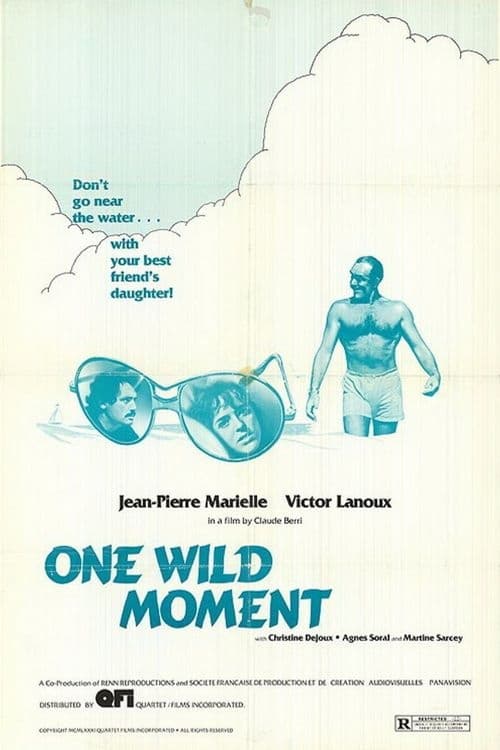
Pierre, 44, contentedly divorced, takes his teen daughter to the Côte d'Azur along with his friend Jacques and Jacques' own teen daughter, Françoise. On the topless beaches of Saint-Tropez, Jacques and Pierre discuss marriage and being parents. Then, in a wild moment at a nighttime party, Françoise starts playing with Pierre, and one thing leads to another: they become lovers. After a couple of trysts, Pierre wants out, but Françoise declares her love for him and wants to tell her father about it. She does, but leaves out Pierre's name, so Jacques enlists Pierre's help in identifying who seduced his daughter. What will Pierre do?
2001

1981
1976

1968

1983
1979

1974
1993
No reviews yet. Be the first to share your thoughts on this movie!
Use the rating form above to leave a star rating and optional review.