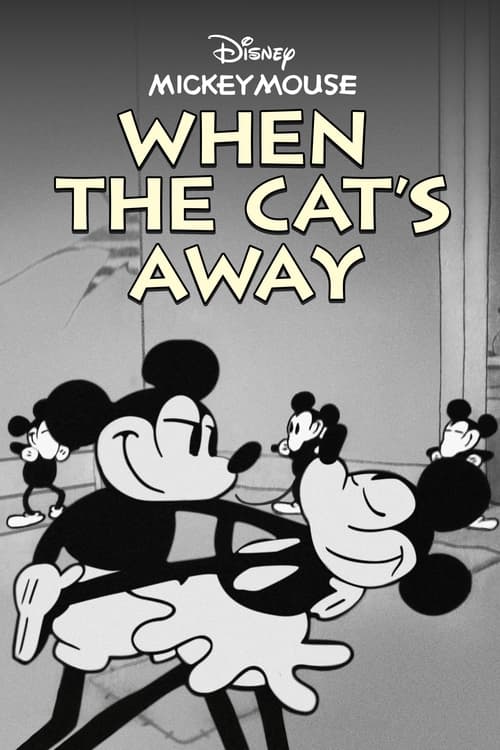
When the Cat's Away
1929
No user ratings available yet
Diversity score: 1.4 out of 10

1941
Director
Robert Clampett
Runtime
9 minutes
Average Rating
No ratings yetSynopsis
Porky hosts a radio program, where animals tell their stories. The guest star is Kansas City Kitty, the best mouser in the country. She tells the story of her life, including her marriage to Tom Collins, the birth of Little Patrick (not necessarily in that order), and the turning point of her life. The mice have plotted out a major operation like gangsters. They sneak out and kidnap Patrick and hold him hostage...
Overall Score
Limited
Category Breakdown
LGBTQ+ Representation
The film adheres to heteronormative social frameworks typical of the 1940s. It focuses on a standard familial structure involving marriage and motherhood, with no depictions of same-sex intimacy or non-cisnormative identities.
Gender Representation
Kansas City Kitty serves as a central female protagonist with narrative agency. However, her role is framed through traditional domestic archetypes like marriage and motherhood rather than subverting gender hierarchies.
Racial & Ethnic Diversity
The cast consists entirely of anthropomorphic animals, resulting in a homogeneous character set. The film lacks racial or ethnic complexity and avoids using species as metaphors for diverse human identities.
Religious & Cultural Diversity
The story operates within a conventional Western comedic framework. It utilizes gangster-style tropes for slapstick humor but does not engage with or critique broader social, religious, or systemic institutions.
Disability Representation
No visible or invisible disabilities are portrayed in the film. Characters function as idealized, high-energy slapstick archetypes without any representation of physical or mental impairment.
Strengths
Areas for Improvement
AI Analysis
This 1941 short is a product of the Golden Age of animation, prioritizing rhythmic slapstick over social complexity. While it grants a female character a leading role, the narrative remains tethered to the era's traditional domestic and familial tropes. The film lacks intersectional depth, presenting a homogeneous cast of animals that avoids any engagement with racial, ethnic, or LGBTQ+ identities. It functions as a closed domestic environment focused on standard character archetypes. Ultimately, the work reinforces existing social structures rather than challenging them, using crime tropes for comedy rather than social commentary.
1929
1953
1946
1946
1965
1951
1942
1927
1938
1945
1938
1956
No reviews yet. Be the first to share your thoughts on this movie!
Use the rating form above to leave a star rating and optional review.