The Vengeance of Pierre
1923
No user ratings available yet
Representation score: 0.3 out of 10
Representation Score
Good
2001
RDirector
Milcho Manchevski
Runtime
127 minutes
Average Rating
No ratings yetNew Showbiz Analysis
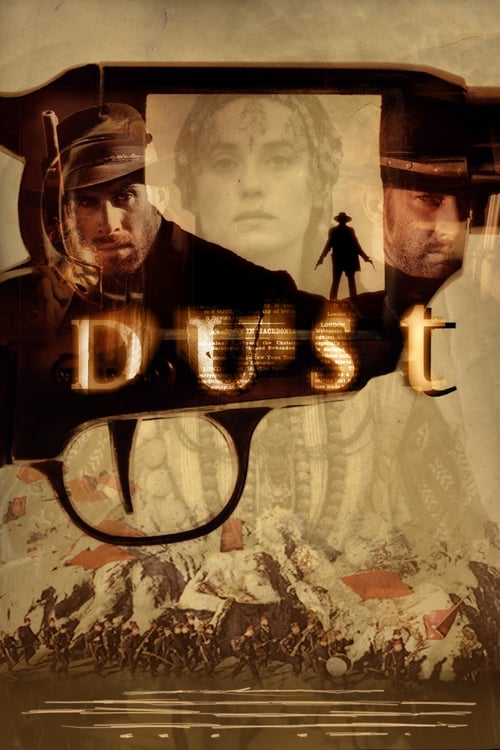
Dust stands out due to its dual-timeline structure, which contrasts a New York western with a Macedonian revolutionary narrative. This approach breaks from conventional linear storytelling and steers clear of a purely Anglo-centric historical perspective. While the film offers a sophisticated and mythic exploration of morality and historical recurrence, it remains tied to traditional archetypes. The narrative focuses heavily on masculine themes of violence and honor, limiting the challenge to gendered power dynamics. Overall, the film's strength lies in its refusal to conform to a single Western viewpoint. It presents a nuanced, multi-ethnic portrayal of historical struggles, even if it does not prioritize contemporary identity politics.
Category Breakdown
The film does not include explicit LGBTQ+ identities or relationships that go beyond the assumption that everyone is straight. It follows traditional romantic storylines without introducing any queer-coded characters.
Female characters play important roles in driving the emotional storyline rather than being passive. However, the film frequently emphasizes traditional masculine themes such as violence and honor.
The film sets its story in a Macedonian revolutionary context, providing a non-Western historical perspective. This shifts the narrative away from a predominantly Anglo-centric view to a more diverse ethnic representation.
The film delves into complex religious loyalties through characters like Elijah, favoring a relativistic and mythic interpretation of history over a singular, triumphalist morality.
There are no prominent characters with visible or invisible disabilities. Characters are defined by their socio-political roles rather than by neurodivergence or physical disabilities.
Present on Screen
Limited or Absent
Official Synopsis
Two parallel tales of redemption, a century apart. In the New York storyline, Edge hunts for Angela's gold to pay back a debt, and gradually grows closer to her. In the Macedonian story, the brothers end up fighting for opposite sides of a revolution, with the religious Elijah taking up sides with the Ottoman sultan and gunslinger Luke joining "the Teacher" , a Macedonian rebel.
1923

1994
1922
1968

1955

1970

2002
2000
No reviews yet. Be the first to share your thoughts on this movie!
Use the rating form above to leave a star rating and optional review.