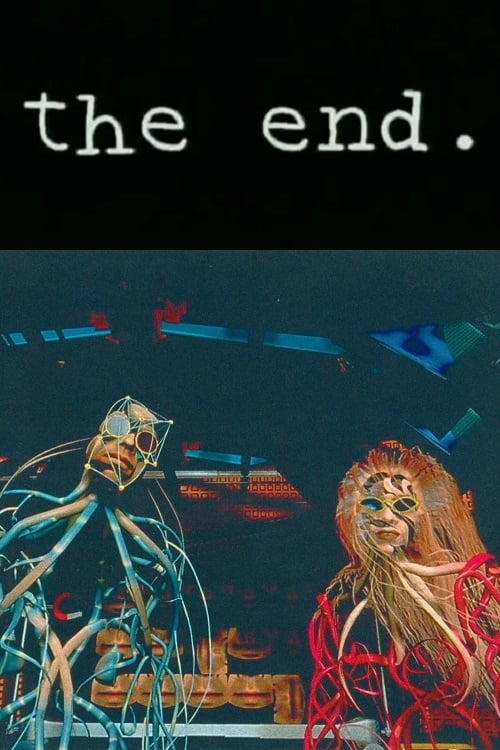
The End.
1995
No user ratings available yet
Representation score: 5.8 out of 10
Representation Score
Limited
2015
Director
Beorn Leonard
Runtime
4 minutes
Average Rating
No ratings yetNew Showbiz Analysis
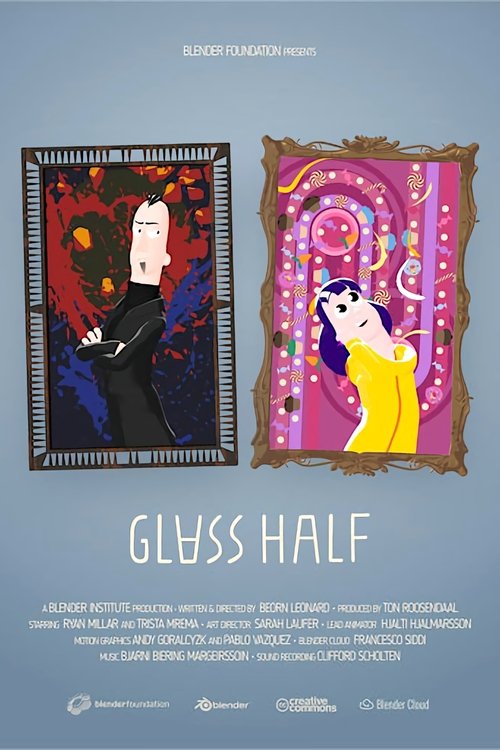
Glass Half is a minimalist, dialogue-driven animated short that focuses on the intellectual conflict between two art critics. The narrative prioritizes the deconstruction of meaning and subjective morality over character-driven demographic exploration. Because the film relies on a dialectic between two individuals in a gallery, the focus remains on the interpretation of art rather than social identity. This creates a neutral baseline for most categories, as the work lacks specific descriptors for race, gender, or disability. Ultimately, the film functions as a study of perspective. While it avoids traditional hierarchies, it also lacks visible characters who reflect more than one aspect of diversity.
Category Breakdown
The film centers on a meeting and argument between two individuals. Although the relationship is not explicitly defined, the minimalist setting allows for some open interpretation regarding identity.
The characters are described simply as amateur art critics. There is no indication of established gender hierarchies or specific information about the gender of the performers.
The provided context offers no information regarding the racial or ethnic identities of the characters. There is no data indicating a diverse cast or visual representation.
The narrative explores subjective morality and individual perspective. This post-modern approach prioritizes personal interpretation over objective reality, though it lacks broader institutional critiques.
There is no mention of neurodivergence, physical disabilities, or mental health conditions. The character descriptions and plot summary do not address these themes.
Present on Screen
Limited or Absent
Official Synopsis
Two amateur art critics meet in a gallery and argue passionately about the pieces they see, until finally they find a piece on which they can agree...
1995
2011
2010
2012

2008
2015
2015

2014
No reviews yet. Be the first to share your thoughts on this movie!
Use the rating form above to leave a star rating and optional review.