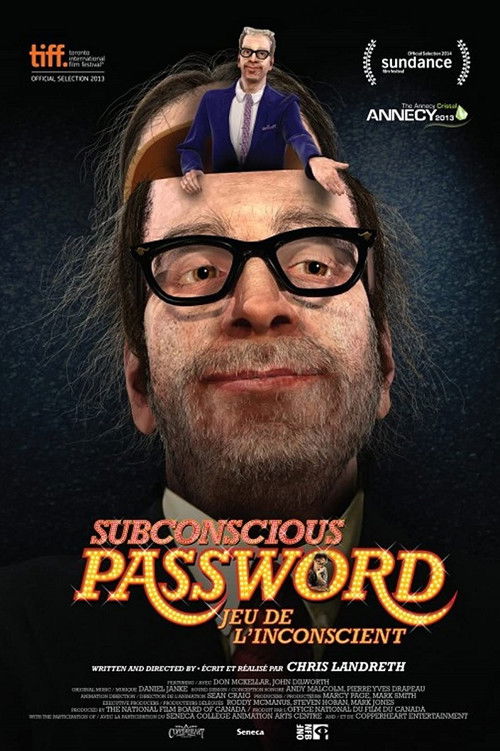
Subconscious Password
2013
No user ratings available yet
Representation score: 7.6 out of 10
Representation Score
Fair
1995
Director
Chris Landreth
Runtime
6 minutes
Average Rating
No ratings yetNew Showbiz Analysis
The film prioritizes psychological complexity and the subversion of creative hierarchies over overt demographic representation. It functions as a meta-narrative critique of the relationship between an artist and their subjects. The film's strength lies in its thematic depth, using avant-garde animation to explore the instability of authority and the subjectivity of truth. This approach offers a sophisticated engagement with mental health and cognitive fragmentation. However, the work lacks specific, verifiable data regarding racial, ethnic, or explicit LGBTQ+ identities. The focus remains heavily on abstract psychological concepts rather than clear social representation.
Category Breakdown
While there are no explicit LGBTQ+ characters, the film's exploration of psychological subjectivity challenges traditional assumptions about relationships and identity.
By presenting the animator as being judged by his creations, the film questions the traditional dominance of male authority in storytelling.
Due to the abstract nature of the animation, there is insufficient information about the racial or ethnic backgrounds of the characters.
The film examines skepticism and subjective morality, questioning the idea of a single, absolute truth through the portrayal of a flawed creator's vision.
The fragmented imagery in the film serves as a metaphor for neurodivergence and psychological distress, highlighting internal struggles and cognitive fragmentation.
Present on Screen
Limited or Absent
Official Synopsis
An animator finds himself trying to explain his (lack of) artistic vision to his creations, who just aren't impressed.
2013
2011
1994

2012
1995
2019
2006
2013
No reviews yet. Be the first to share your thoughts on this movie!
Use the rating form above to leave a star rating and optional review.