Face
2000
No user ratings available yet
Representation score: 4.0 out of 10
Representation Score
Fair
1996
Director
Shinji Aoyama
Runtime
80 minutes
Average Rating
No ratings yetNew Showbiz Analysis
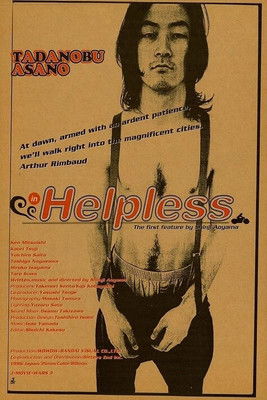
Helpless is a gritty, postmodern crime drama that prioritizes psychological depth and social critique over demographic variety. It excels in its deconstruction of Japanese social institutions, showing the breakdown of traditional hierarchies and the erosion of social cohesion in a post-bubble era. However, the film remains limited by its narrow demographic focus. It operates within a predominantly male-centric framework and lacks explicit LGBTQ+ representation or ethnic diversity, reflecting the specific socioeconomic context of 1990s Japan. While it lacks traditional diversity, the film finds strength in its nuanced portrayal of vulnerability through the character of Yuri, using disability to explore human frailty and systemic neglect without falling into easy clichés.
Category Breakdown
The film does not explicitly include LGBTQ+ identities or non-cisgender narratives. The story centers on the psychological journey of the male protagonist and his close friends.
The story focuses on a male-dominated crime drama. Female characters such as Yuri serve mainly as subjects of care or plot catalysts rather than agents of change.
Set in 1990s urban Japan, the film shows a largely uniform society. It emphasizes internal class and psychological divisions rather than racial dynamics.
Aoyama skillfully breaks down traditional institutional stability. The film portrays the collapse of family and social hierarchies as a reaction to a hollowed-out modernity.
Yuri’s character serves as a focal point for discussing the ethics of care. Her presence highlights the systemic inability of society to support its most vulnerable members.
Present on Screen
Limited or Absent
Official Synopsis
Believing his boss double-crossed him, recently released gangster Yasuo is on his way to find the betrayer, but before setting out, he asks Kenji to care for his mentally challenged sister and a mysterious black bag.
2000
1997
1997
1996
2007
2018

1994
1997
No reviews yet. Be the first to share your thoughts on this movie!
Use the rating form above to leave a star rating and optional review.