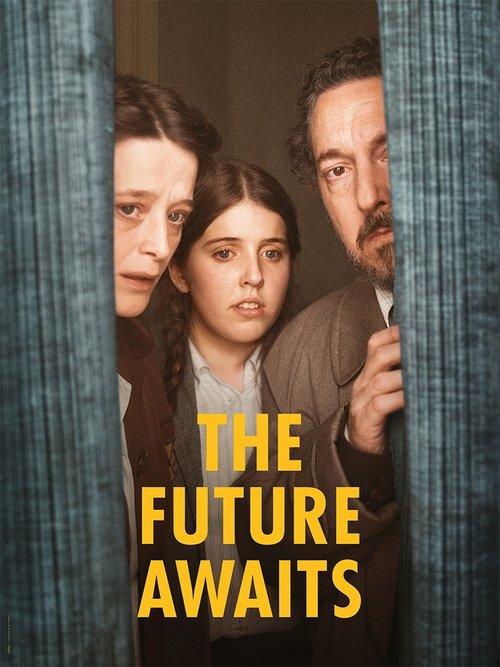
The Future Awaits
2025
No user ratings available yet
Diversity score: 7.1 out of 10

2005
Director
Richard Dembo
Runtime
112 minutes
Average Rating
No ratings yetSynopsis
Starting in 1944 in the wake of the Liberation and continuing into the '60s, 'houses of hope' were established to lend a semblance of continuity to youngsters orpahaned by the war. Nina's Home takes place between September 1944 and January 1946 in an orphanage housed in a chateau outside Paris. At the outset, the country residence is run by Nina who has a core population of French Jewish children whose parents are probably dead. Food is scarce. News of the Concentration Camps hasn't hit yet, but some months later, a contingent of youths arrive form the liberated camps. The children are a disparate, wild, damaged group and conflicts ensue. Nina's challenge is to help them make their first delicate moves toward the future and in the process restore all of them, including herself, to life.
Overall Score
Good
Category Breakdown
LGBTQ+ Representation
The film focuses on the survival of Jewish orphans in a post-liberation setting. There is no explicit evidence of LGBTQ+ characters or narratives addressing non-heteronormative identities.
Gender Representation
Nina serves as the primary authority and emotional anchor, disrupting traditional patriarchal hierarchies. The film highlights female agency through her role as a protector and leader.
Racial & Ethnic Diversity
The narrative centers on a population of French Jewish children and survivors from concentration camps. It prioritizes the agency of this marginalized ethnic group within a historical context.
Religious & Cultural Diversity
The story explores the collapse of traditional family units and the reliance on unconventional houses of hope. It offers a complex, nuanced view of human behavior following systemic collapse.
Disability Representation
The film emphasizes psychological trauma and the damaged state of the children. While mental health is central to their arcs, specific physical or neurodivergent disabilities are not detailed.
Strengths
Areas for Improvement
AI Analysis
Nina's House is a humanistic historical drama that centers on the resilience of displaced Jewish children following the Liberation. It successfully shifts the narrative focus away from traditional masculine leadership by positioning a female protagonist as the community's primary steward. The film excels in its ethnic representation, providing depth to the lived experiences of the Jewish diaspora. By focusing on the specific trauma of Holocaust survivors, it avoids monolithic depictions of post-war France. However, the film lacks explicit representation of LGBTQ+ identities and does not provide specific details regarding physical or neurodivergent disabilities. The focus remains primarily on ethnic identity and the psychological scars of war.
2025

1990

2019

2020

2021

2014

1988

2017

2020

2004

1968

1997
No reviews yet. Be the first to share your thoughts on this movie!
Use the rating form above to leave a star rating and optional review.