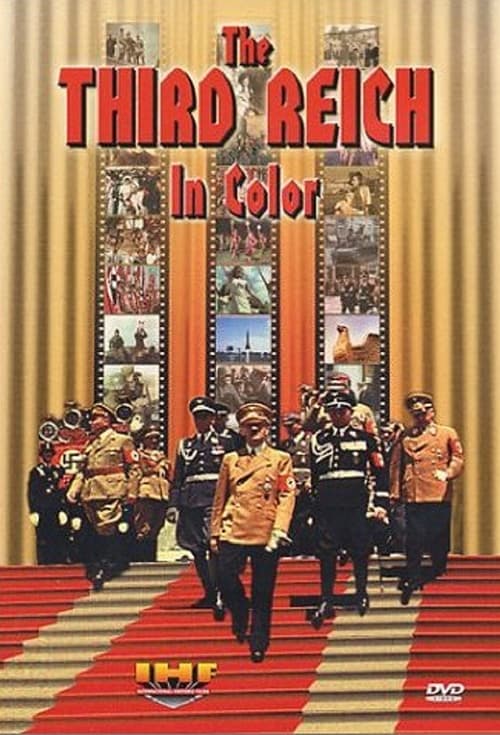
The Third Reich In Color
1998
No user ratings available yet
Representation score: 2.1 out of 10
Representation Score
Minimal
1960
Not RatedDirector
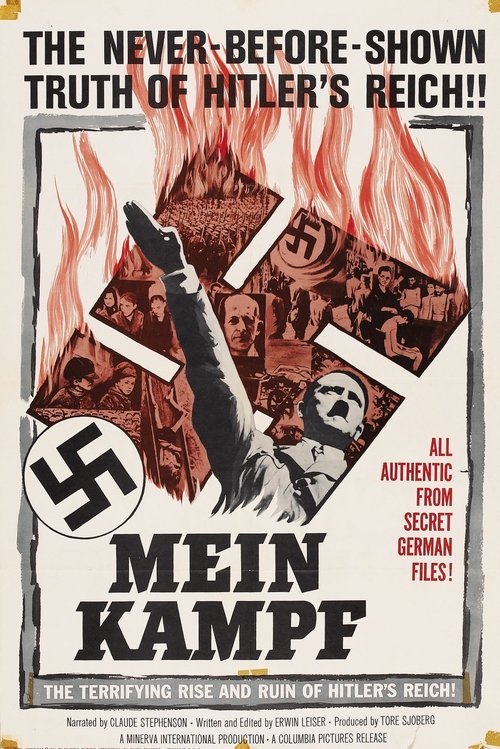
Erwin Leiser
Runtime
197 minutes
Average Rating
No ratings yetNew Showbiz Analysis
Erwin Leiser’s documentary is a historical study of totalitarianism that relies exclusively on archival footage from the Nazi propaganda apparatus. Because the film's visual foundation is built upon the very imagery used to promote extremist, nationalist, and racial hierarchies, the work lacks diverse representation by design. The film functions as a critique of the Third Reich's mechanisms, yet it remains tethered to the homogeneous and patriarchal perspectives of the 1930s and 40s. The focus remains strictly on political and military structures, leaving little room for multi-layered narratives. Ultimately, the documentary serves as a confrontation with historical propaganda rather than a platform for diverse social identities. Its low diversity score reflects the inherent nature of the historical material it examines.
Category Breakdown
The documentary focuses on the rise and fall of the Third Reich using archival footage. It does not include any LGBTQ+ characters or narratives about non-straight identities.
The film centers on male leadership and military combat within the Nazi regime. It highlights rigid patriarchal structures without challenging traditional gender roles.
The visual content is based on the Aryan-centric worldview of the era's propaganda. The film uses historical footage that inherently centers a homogeneous, white perspective.
The footage documents a period of intense nationalist fervor and exclusionary ideologies. It represents the opposite of secularism or moral relativism through its reliance on state-driven imagery.
Disability is not a central narrative theme or a source of character's ability to drive the story. The archival material does not center these identities within its analytical structure.
Present on Screen
Limited or Absent
Official Synopsis
Using exclusively archival footage, Erwin Leiser traces the rise and collapse of the Third Reich, from Adolf Hitler’s early years to the devastation of Europe and his suicide in 1945. The film draws heavily on material produced and preserved by the Nazi propaganda apparatus to confront the mechanisms, imagery, and consequences of totalitarian power.
1998

1935

2002

1985
1974

1998
1961

1953
No reviews yet. Be the first to share your thoughts on this movie!
Use the rating form above to leave a star rating and optional review.