
Alcohol and Its Victims
1902
No user ratings available yet
Representation score: 2.2 out of 10
Representation Score
Fair
1908
Director
Albert Capellani
Runtime
36 minutes
Average Rating
No ratings yetNew Showbiz Analysis
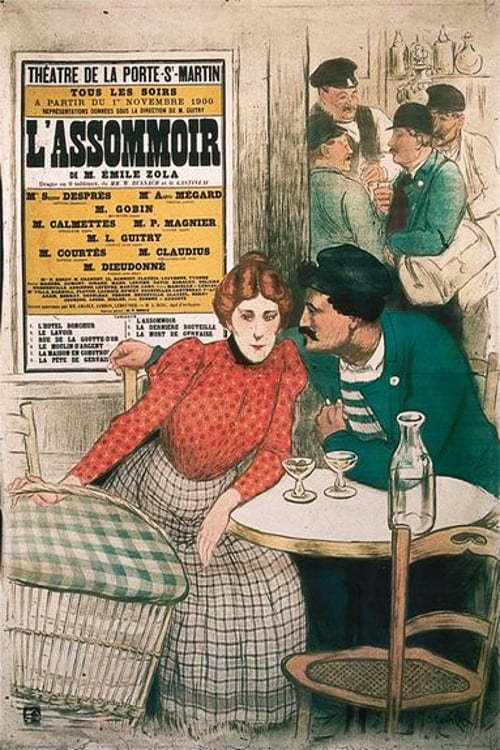
L'Assommoir is a gritty exploration of Naturalism that replaces romanticized domesticity with the harsh realities of the Parisian working class. It succeeds in deconstructing the idealized Western family by showing how economic instability and systemic neglect dismantle social hierarchies. While the film lacks diverse racial representation or LGBTQ+ identities, it offers a sophisticated critique of capitalist and social structures. It shifts the focus from individual moral failings to the oppressive environmental forces that drive characters toward tragedy. Ultimately, the work serves as a powerful study of class dynamics and the vulnerability of traditional institutions to systemic decay.
Category Breakdown
The film focuses on the domestic and social struggles of a heterosexual working-class family. There are no non-straight identities or queer themes in the narrative.
The story centers on the female experience through Gervaise, portraying the domestic sphere as a site of intense struggle and labor. It explores the breakdown of traditional maternal roles under socioeconomic pressure.
As a period study of the 1908 Parisian proletariat, the cast reflects the homogeneous demographic of that era. There is no evidence of racial blending or color-blind casting.
The film critiques social structures by showing how systemic corruption and environmental decay threaten the sanctity of the family. It frames character behaviors as symptoms of a crushing socioeconomic environment.
The narrative provides a study of chronic alcoholism as a deterministic force that strips characters of ability to act. However, it may treat addiction as a tragic plot device rather than a nuanced study.
Present on Screen
Limited or Absent
Official Synopsis
Everyman Coupeau's attempts to stop drinking are routinely thwarted by the wicked and vengeful Virginie. Based on Zola's novel, Capellani's film is about the free fall of a group of working-class French folk into degradation and tragedy due to carelessness, jealousy, and alcohol abuse. At the time of its release, L'Assommoir was hugely successful.
1902
1967
1913

1945
1909
1924
1931
1920
No reviews yet. Be the first to share your thoughts on this movie!
Use the rating form above to leave a star rating and optional review.