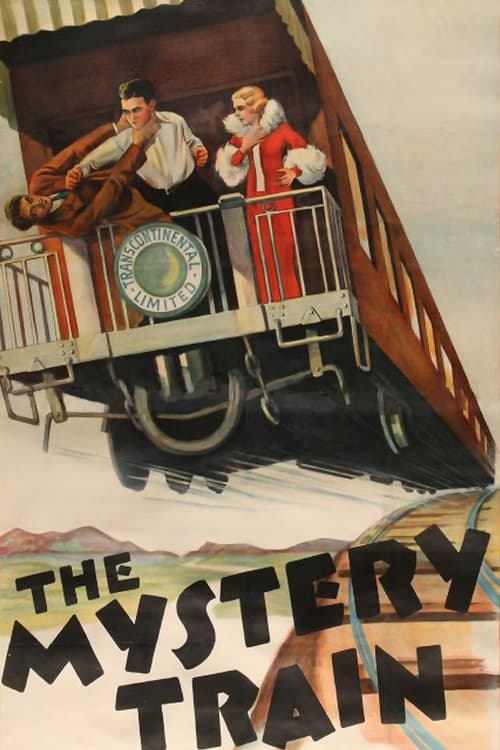
The Mystery Train
1931
No user ratings available yet
Diversity score: 2.2 out of 10

1936
ApprovedDirector
Arthur Lubin
Runtime
57 minutes
Average Rating
No ratings yetSynopsis
While crossing on the train ferry to New Orleans, roving reporter Addison Francis Murphy borrows money from singing hillbilly "Carolina," then loses it all in a crap game. Outside on deck, Murphy sees two men shaking hands, and after he looks away, hears a splash of water and discovers both men have disappeared...
Overall Score
Limited
Category Breakdown
LGBTQ+ Representation
The film lacks any indication of LGBTQ+ characters or non-cisnormative identities. The narrative follows a traditional mystery structure centered on a male protagonist.
Gender Representation
The plot focuses on Addison Francis Murphy, a male reporter who drives the action. The female character, Carolina, is relegated to a passive role defined by a single transaction.
Racial & Ethnic Diversity
The setting suggests the homogeneous casting standards typical of the 1930s. There is no evidence of a diverse cast or nuanced ethnic representation beyond regionalist tropes.
Religious & Cultural Diversity
The story follows a standard genre framework involving gambling and debt. It lacks any systemic critique, focusing instead on individual morality and cause-and-effect mystery elements.
Disability Representation
There is no information regarding characters with physical, sensory, or neurodivergent disabilities in this production.
Strengths
Areas for Improvement
AI Analysis
Mysterious Crossing is a product of the 1930s Hollywood studio system, adhering to the era's standard social hierarchies. The narrative is driven by a male protagonist, leaving little room for diverse perspectives or intersectional agency. The film relies on conventional archetypes, such as the 'hillbilly' character, which suggests a reliance on regionalist tropes rather than meaningful cultural depth. This approach limits the scope of the film's social engagement. Ultimately, the production lacks visible marginalized identities and focuses on a traditional mystery structure. It reflects the period's tendency toward homogeneous casting and narrow character development.
1931

1934
1944

1935
1935
1941
1935
1929
1952

1934
1937
1934
No reviews yet. Be the first to share your thoughts on this movie!
Use the rating form above to leave a star rating and optional review.