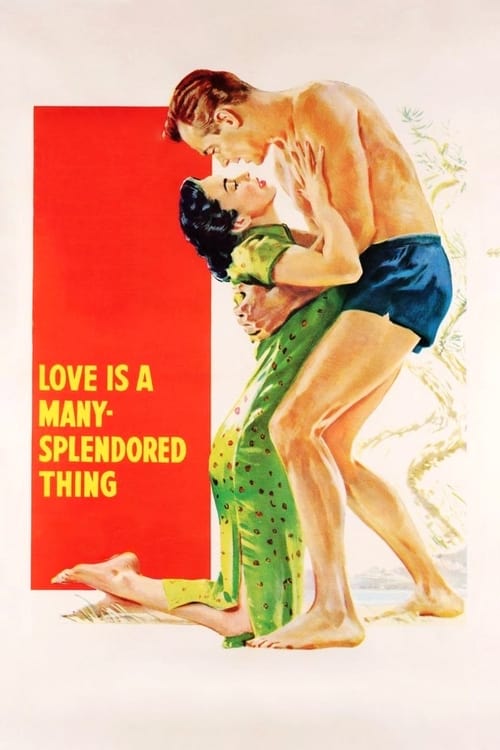
Love Is a Many-Splendored Thing
1955
No user ratings available yet
Diversity score: 4.1 out of 10

1957
NRDirector
Henry King
Runtime
130 minutes
Average Rating
No ratings yetSynopsis
A group of disillusioned American expatriate writers live a dissolute, hedonistic lifestyle in 1920's France and Spain.
Overall Score
Fair
Category Breakdown
LGBTQ+ Representation
The film relies on subtext rather than overt identity. While it lacks explicit queer characters, the themes of unconsummated desire offer a departure from standard romantic tropes of the era.
Gender Representation
Lady Brett Ashley provides a significant disruption of mid-century gender hierarchies. Her independence and rejection of domesticity challenge the era's typical depictions of female passivity and submissive femininity.
Racial & Ethnic Diversity
The narrative focuses on a homogeneous group of wealthy Caucasian expatriates. The social circle reflects a specific socioeconomic context but lacks racial or ethnic diversity in its central arcs.
Religious & Cultural Diversity
The film critiques the stability of Western institutions through the lens of the 'Lost Generation.' It portrays the breakdown of traditional social structures as a psychological reality of the post-war era.
Disability Representation
Jake Lavery’s wartime injury is a central driver of the plot. The film avoids inspiration tropes, instead linking his impairment to his psychological state and social role.
Strengths
Areas for Improvement
AI Analysis
The film serves as a transitional text that disrupts 1950s cinematic norms through its focus on disillusionment. It succeeds in deconstructing gender roles and exploring the psychological impact of physical impairment, providing a more complex narrative than many contemporary dramas. However, the film remains limited by its narrow demographic focus. The lack of racial diversity and explicit LGBTQ+ representation keeps the score from reaching a higher tier of inclusivity. Ultimately, the work's strength lies in its refusal to provide moral clarity, opting instead to examine the decay of traditional Western social structures and shifting identities.
1955

1963
1958

1956
1986

1970
1986

1985

1969
1965
1964

1973
No reviews yet. Be the first to share your thoughts on this movie!
Use the rating form above to leave a star rating and optional review.