Jules and Jim
1962
No user ratings available yet
Representation score: 4.9 out of 10
Representation Score
Good
1986
Not RatedDirector
Alain Resnais
Runtime
112 minutes
Average Rating
No ratings yetNew Showbiz Analysis
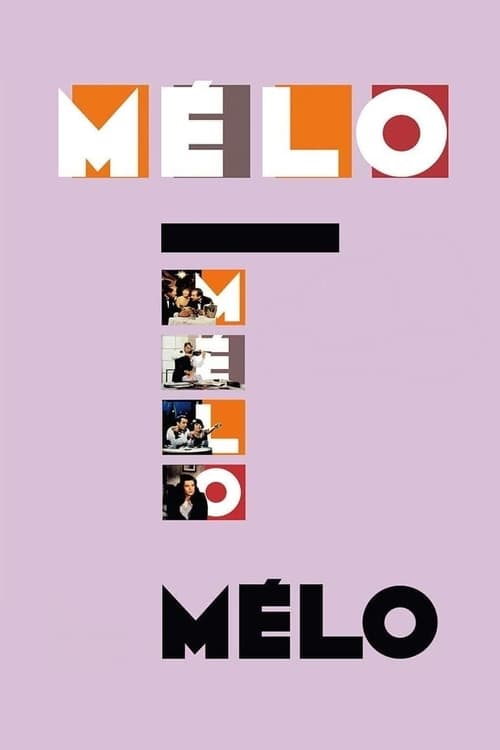
Alain Resnais’s *Mélo* is a sophisticated exploration of memory and the instability of truth. It succeeds intellectually by deconstructing traditional social norms and granting female characters a level of autonomy that disrupts conventional hierarchies. However, the film remains demographically traditional. Its setting in 1920s Paris results in a homogeneous cast that lacks racial and ethnic diversity. Additionally, the narrative lacks explicit LGBTQ+ identities or representations of disability. Ultimately, the work is a study of psychological complexity rather than the intersection of various identities. It offers a progressive view of gendered autonomy while remaining anchored in a narrow social stratum.
Category Breakdown
The film centers on heterosexual relationships and infidelity. There is no indication of non-straight identities influencing the main storyline.
Women characters have significant emotional independence and autonomy. The narrative challenges the passive female muse stereotype by emphasizing their perspectives and social interactions.
The cast is primarily uniform, reflecting the specific social context of 1920s Paris. The film does not leverage diverse ethnic backgrounds to broaden its scope.
The film excels in its modern critique of social institutions such as marriage. It portrays truth and morality as subjective, fragile constructs rather than fixed absolutes.
There are no significant portrayals of physical or neurodivergent disabilities. Character struggles remain confined to psychological and interpersonal issues.
Present on Screen
Limited or Absent
Official Synopsis
In 1920s Paris, violinists and lifelong friends Pierre Belcroix and Marcel Blanc are happy with their lives, although Marcel has become famous and Pierre has not. Pierre is married to Romaine, a stylish young flapper. However, Marcel meets and falls in love with her, which Marcel little suspects.
1962

1971

1966

1996
1965

1945

1984

1995
No reviews yet. Be the first to share your thoughts on this movie!
Use the rating form above to leave a star rating and optional review.