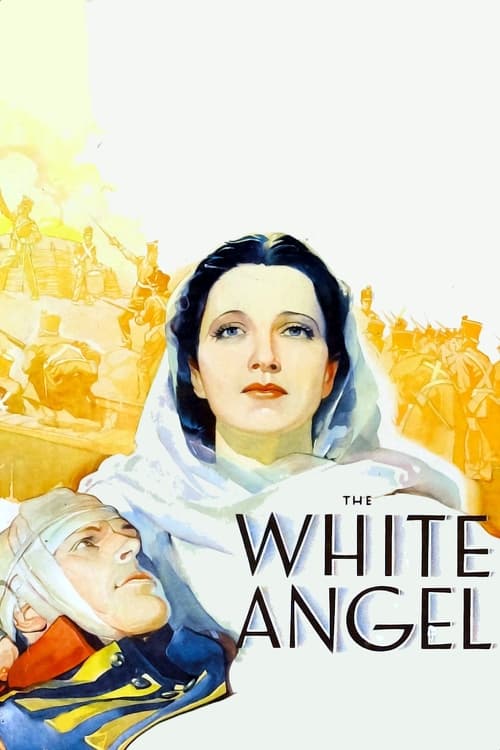
The White Angel
1936
No user ratings available yet
Diversity score: 2.5 out of 10

1934
ApprovedDirector
Irving Cummings
Runtime
80 minutes
Average Rating
No ratings yetSynopsis
The title represents the hopeful, ambitious students at a hospital training school and is primarily a story of the stern discipline and laborious physical and mental toil they endure in order to become nurses and join the White Parade. It is told mainly through the character of June Arden who finds romance with Ronald Hall III on the way, with side stories of the other girls who find failure, success, laughs and tears on the way.
Overall Score
Minimal
Category Breakdown
LGBTQ+ Representation
The film focuses on traditional romantic entanglements, specifically the courtship between June Arden and Ronald Hall III. It operates within a standard heteronormative framework without non-cisnormative identities.
Gender Representation
The narrative centers on female characters within a nursing school, providing them with professional agency. However, their struggles are frequently intertwined with romantic subplots and traditional gender dynamics.
Racial & Ethnic Diversity
The film reflects the homogeneous casting conventions of 1934. There is no evidence of racial blending or non-white majority casts, aligning with the era's standard of perceived normalcy.
Religious & Cultural Diversity
The story celebrates Western institutional values and the sanctity of medical professionalism. It portrays professional duty and romantic stability as the primary drivers of a successful life.
Disability Representation
The medical setting serves as a backdrop for melodrama rather than a vehicle for representation. The focus remains on the caregivers rather than the agency of patients.
Strengths
Areas for Improvement
AI Analysis
The White Parade is a period-typical melodrama that prioritizes conventional romantic arcs and traditional social hierarchies. While it provides a platform for female professional endurance, it does so within a restrictive framework. The film lacks intersectional complexity, reinforcing the era's standard cultural and racial norms. It functions as a celebration of institutional stability rather than a critique of systemic structures. Ultimately, the narrative centers on professional achievement and romantic stability, offering little representation for marginalized identities or non-traditional lifestyles.
1936
1951
1950

1942
1930

1952
1938
1934
1927

1946
1939
1944
No reviews yet. Be the first to share your thoughts on this movie!
Use the rating form above to leave a star rating and optional review.