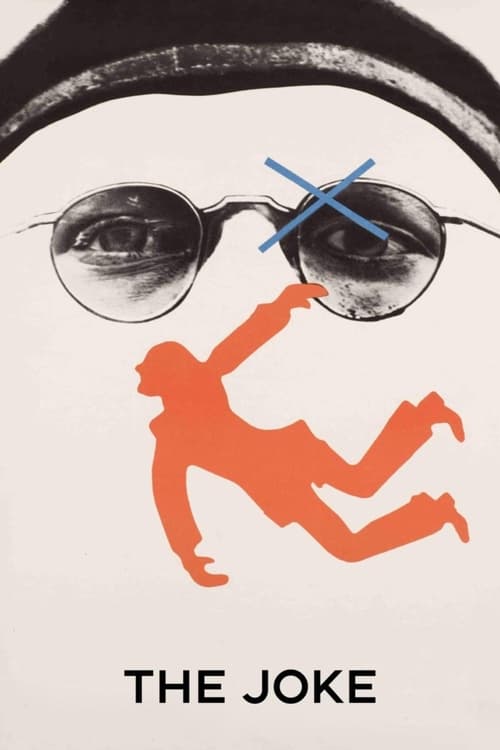
The Joke
1969
No user ratings available yet
Representation score: 2.1 out of 10

Representation Score
Fair
1997
Not RatedDirector
Petr Nikolaev
Runtime
97 minutes
Average Rating
No ratings yetNew Showbiz Analysis
The film excels at challenging traditional social hierarchies and gender roles through its central characters. By making the female lead the professional anchor, it avoids common gender clichés. However, the film's deep focus on the Czech experience limits its broader appeal due to a lack of racial and LGBTQ+ diversity. Ultimately, it is a culturally rich critique of political instability that remains narrow in its demographic scope.
Category Breakdown
The film centers on a traditional nuclear family structure and does not include any explicit LGBTQ+ characters or non-straight relationships.
The story challenges traditional gender roles by focusing on Milena, a professional lawyer who plays a significant role in driving the narrative. Her husband, Ales, is portrayed as aimless, reversing typical domestic power dynamics.
Set within a specific Czech historical context, the film features a homogeneous cast. It focuses on internal social transitions rather than multi-ethnic or perspectives that reflect multiple aspects of identity.
The narrative provides a deep cultural critique by examining the impact of the 1968 Russian invasion and the Velvet Revolution on political systems and institutional stability.
There is no information about the inclusion of characters with physical or neurodivergent disabilities.
Present on Screen
Limited or Absent
Official Synopsis
Capturing the dark humor of Czech author Michal Viewegh's chronicle of life after the Velvet Revolution, this black comedy chronicles three decades in the life of a small Czech family. While the original novel centered on the protagonist Kvido from his conception through his adulthood, first time director Petr Nikolaev and screenwriter Jan Novak changed the focus to his parents Milena, an extremely self-effacing lawyer who acts on stage in her spare time, and Ales, a rather aimless government worker who tends to drift wherever the wind takes him. The lives of Ales and Milena change dramatically following the Russian invasion of Prague in 1968.
1969
2006
1998
2011
2014
2003

1992
2010
No reviews yet. Be the first to share your thoughts on this movie!
Use the rating form above to leave a star rating and optional review.