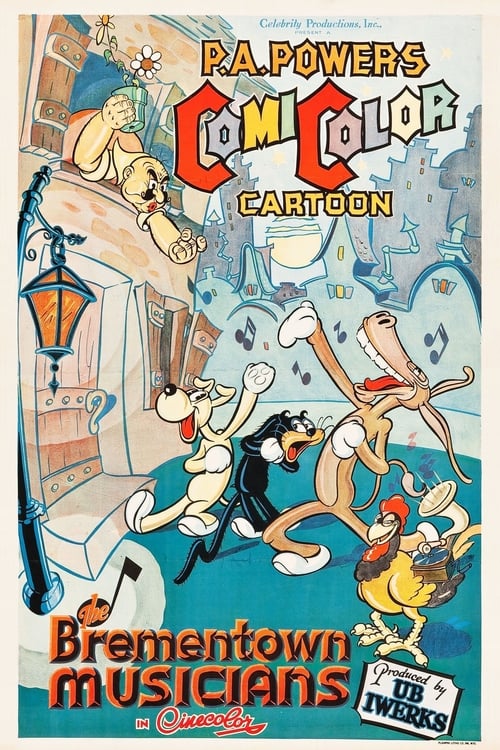
The Brementown Musicians
1935
No user ratings available yet
Representation score: 3.3 out of 10

Representation Score
Minimal
1922
Director
Walt Disney
Runtime
7 minutes
Average Rating
No ratings yetNew Showbiz Analysis
This early silent animation uses anthropomorphic animal characters to tell a simple quest story. Since the protagonists are a horse, cat, dog, and rooster, the film avoids human social hierarchies, resulting in a lack of meaningful representation across most categories. The story follows standard early 20th-century fable clichés, focusing on adventure and musical fame. It stays within safe, conventional boundaries that do not challenge social structures or provide depth on identity issues. Ultimately, the work is a product of its era, prioritizing folklore and slapstick humor over the exploration of identity or systemic power dynamics.
Category Breakdown
The story centers on animal companions seeking fame. There are no romantic relationships, gender identity explorations, or same-sex intimacies featured.
The animal cast avoids traditional human gender roles. The film does not include any female-coded characters or subvert masculine norms.
Since the main characters are animals, racial and ethnic diversity are not directly applicable. The story does not use species as metaphors for underrepresented human identities.
The film follows a traditional Western folklore quest. It does not critique Western institutions, capitalism, or organized religion.
None of the animal protagonists have visible or invisible disabilities. Disability is not used as a narrative device or plot point.
Present on Screen
Limited or Absent
Official Synopsis
Four animal musicians consisting of a Horse, Cat, Dog, & Rooster set out on their own quest to try to find some fame by playing their own music. Unfortunitly every where they go, trouble always occurs whether they are being chased by town folk, a sword fish, or being attacked by an army.
1935
1929
1925

1928
1989
1929
1925

1924
No reviews yet. Be the first to share your thoughts on this movie!
Use the rating form above to leave a star rating and optional review.