Muzzle Tough
1954
No user ratings available yet
Representation score: 0.3 out of 10
Representation Score
Minimal
1942
Director
Friz Freleng
Runtime
7 minutes
Average Rating
No ratings yetNew Showbiz Analysis
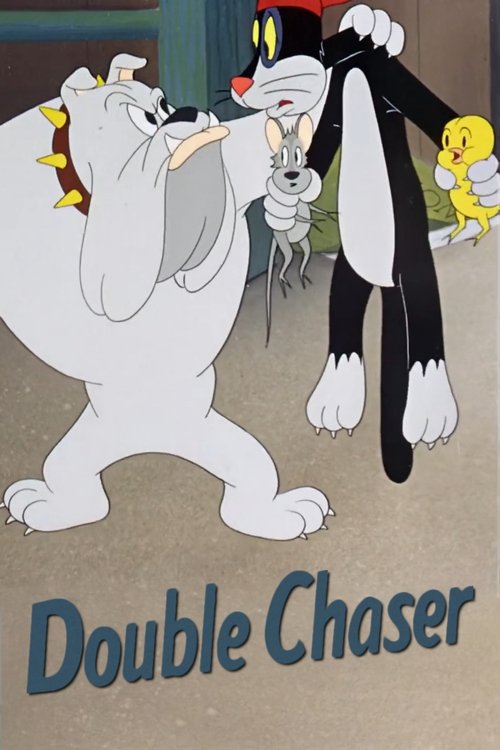
Double Chaser is a hallmark of the 1940s Golden Age of animation, emphasizing kinetic energy and physical humor over social or identity-based narratives. The story revolves around traditional slapstick clichés, where character actions are driven by survival instincts rather than social positioning. Since the film does not include underrepresented identities or subversion of established social hierarchies, it adheres closely to a traditional profile. Characters are portrayed as archetypal animal figures within a conventional comedic framework. Ultimately, the film’s emphasis on cartoon physics and situational irony means it does not delve into the complex social or political themes found in modern works.
Category Breakdown
The film centers on a predator-prey relationship involving a mouse, a cat, and a bulldog. There are no depictions of LGBTQ+ identities or same-sex intimacy.
Characters are defined by species and behavior rather than gender. The film lacks complex gender roles or subversion of traditional gender hierarchies.
As an animated short featuring anthropomorphic animals, the film does not address human racial or ethnic identities. The cast is uniform in its species-based archetypes.
The narrative follows a straightforward cause-and-effect structure typical of early 20th-century animation. It does not critique Western institutions or explore systemic social themes.
Characters face physical trauma from explosions and chase sequences as part of slapstick comedy. There is no representation of neurodivergence or disabilities with meaningful ability to act.
Present on Screen
Limited or Absent
Official Synopsis
A mouse, being chased by a cat, enlists the help of a sleeping bulldog. When the dog awakes, the mouse hides in a hen's nest, and the cat disguises himself as a hen - and even does a hen imitation when the chicks hatch. The mouse then keeps pointing out the cat's hiding places, but when he points to a dump where the cat isn't hiding, the dog turns on him. The mouse paints an apple black and lights the fuse, but it explodes and sends him to mouse heaven.
1954
1953
1949
1955
1951
1939
1952
1945
No reviews yet. Be the first to share your thoughts on this movie!
Use the rating form above to leave a star rating and optional review.