Two Weeks Vacation
1952
No user ratings available yet
Diversity score: 1.1 out of 10
1945
NRDirector
Jack Kinney
Runtime
6 minutes
Average Rating
No ratings yetSynopsis
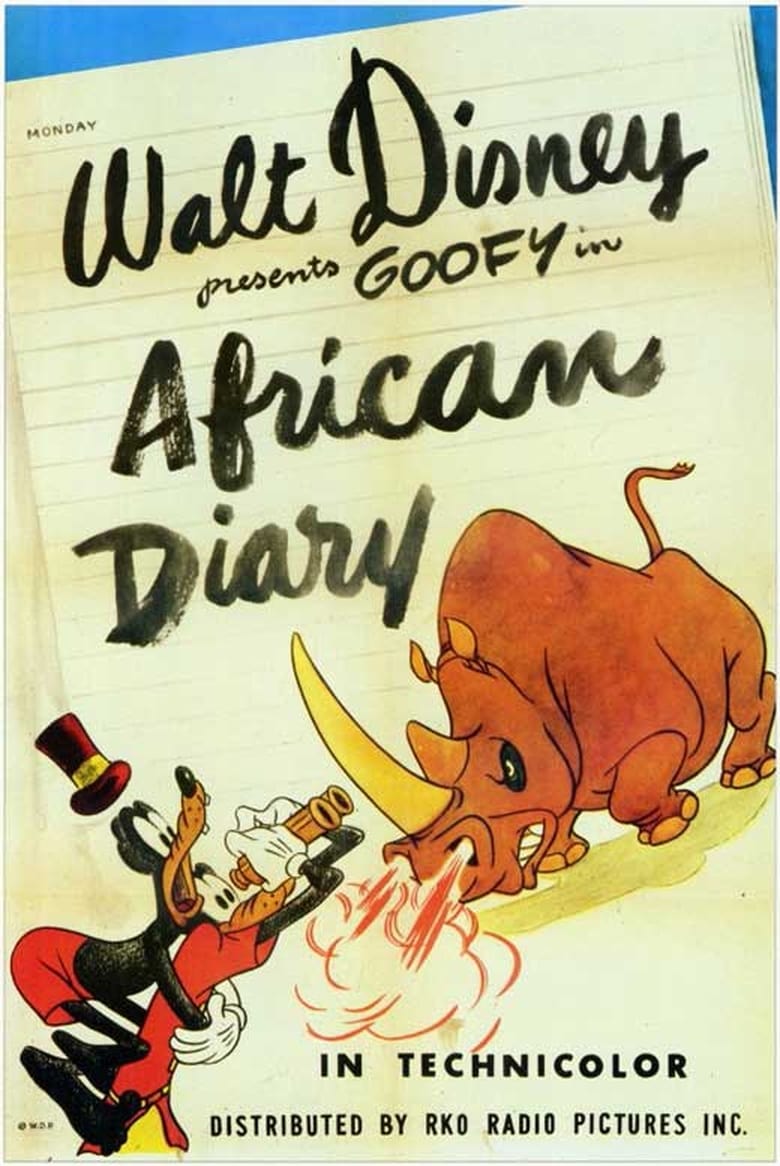
Goofy narrates his own quest to Africa accompanied by various tour guides. He is in search of wild game. After run-ins with various animals while camping for the night and taking his morning plunge (ruined by a hippo that takes all the water with him when exiting the pool), he sets off in search of the black rhinoceros. Unfortunately for Goofy, the rhino is prepared for Goofy (thanks to a stool pigeon bird resting on his horn) and charges him. Goofy tries his gun against the rhino but the rhino is still to much for Goofy so he leaves Africa and leaves the rhino for other hunters.
Overall Score
Minimal
Category Breakdown
LGBTQ+ Representation
The narrative focuses entirely on Goofy’s physical interactions with wildlife. There are no depictions of non-cisnormative identities or stories engaging with sexual orientation.
Gender Representation
Goofy operates within a standard masculine framework of the explorer or hunter. The film lacks female agency or diverse gender expressions, focusing solely on a singular male character.
Racial & Ethnic Diversity
The film uses Africa as a backdrop for a Western character's excursion, reflecting colonial-era tropes. This framing often views non-Western landscapes through a lens of exoticism.
Religious & Cultural Diversity
The story promotes a traditional Western perspective of nature and environmental mastery. It functions as mid-century entertainment that reinforces the status quo without offering cultural critique.
Disability Representation
There are no characters with visible or invisible disabilities. The film does not engage with neurodivergence or physical impairments within its narrative structure.
Strengths
Areas for Improvement
AI Analysis
African Diary is a quintessential product of its 1940s historical context, prioritizing slapstick comedy over social nuance. The narrative architecture relies on established tropes of the era, offering little intersectional depth. The film reinforces conventional Western perspectives regarding exploration and the natural world. By framing the African landscape as a playground for a Western protagonist's quest, it upholds traditional hierarchies of the period. Ultimately, the work lacks the intentionality required to disrupt social norms or provide meaningful representation for marginalized groups.
1952
1952
1954
1953

1931
1950
1956
1937
1956
1942
1950
1951
No reviews yet. Be the first to share your thoughts on this movie!
Use the rating form above to leave a star rating and optional review.