Oskar
1962
No user ratings available yet
Representation score: 1.6 out of 10
Representation Score
Minimal
1993
Director
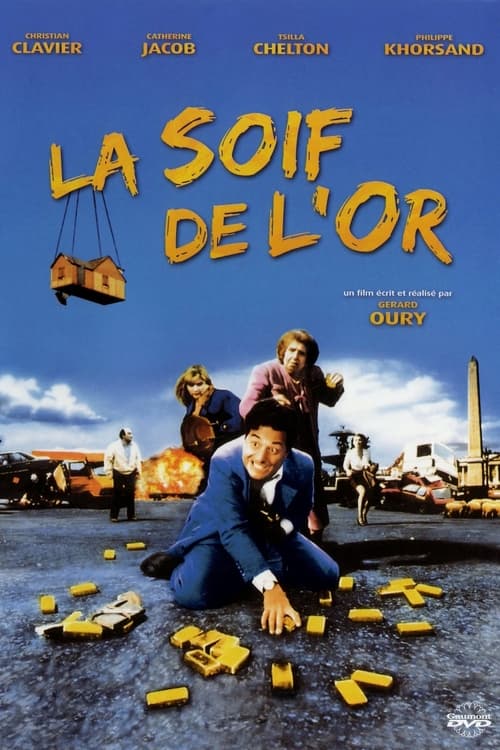
Gérard Oury
Runtime
81 minutes
Average Rating
No ratings yetNew Showbiz Analysis
The Thirst for Gold is a traditional character-driven comedy that relies on conventional social archetypes. The narrative centers on a male protagonist's pursuit of wealth, limiting the scope of its social exploration. While the film offers a cynical view of social contracts and marriage, it lacks complexity in representing diverse identities. The characters and settings suggest a homogeneous social group typical of mid-century European farce. Ultimately, the film does not attempt to challenge patriarchal structures or include diverse racial or sexual identities, resulting in a narrow demographic focus.
Category Breakdown
The film doesn't include any LGBTQ+ characters or stories about non-assuming gender matches what was assigned at birth identities. The plot revolves around a traditional marriage and a divorce caused by financial issues.
The story focuses on a male protagonist driven by greed. Female characters such as Fleurette and Granny Zézette play significant roles but still fit within traditional comedic gender roles.
The narrative seems to center on a homogeneous French social environment. There is no indication of a multi-ethnic cast or diverse racial identities among the characters.
The film explores themes of greed and the corruption of institutions like marriage and the state. These themes are presented through a comedic caper rather than a critical look at systemic issues.
There is no mention of characters with visible or invisible disabilities in the film.
Present on Screen
Limited or Absent
Official Synopsis
Urbain Donnadieu's first love is money. It's also his second, third and fourth love. The only reason he married - a tax inspector named Fleurette - was to avoid a fine for tax evasion. For several years, he has been stealing money from his construction company and buying gold bars with his ill-gotten gains. His plan is to deposit all this wealth in a Swiss Bank, where neither his wife - whom he is about to divorce - nor the French State can get at it. Accompanied by his money-grabbing Granny Zézette, Urbain heads off for Switzerland, with his gold concealed in the walls of a model house on the back of a trailer. Unfortunately, his scheme is threatened by his wife and his embittered ex-chauffeur, who are determined to get his money at any cost...
1962
1974
1938

1964
1952

1951
1943
1970
No reviews yet. Be the first to share your thoughts on this movie!
Use the rating form above to leave a star rating and optional review.