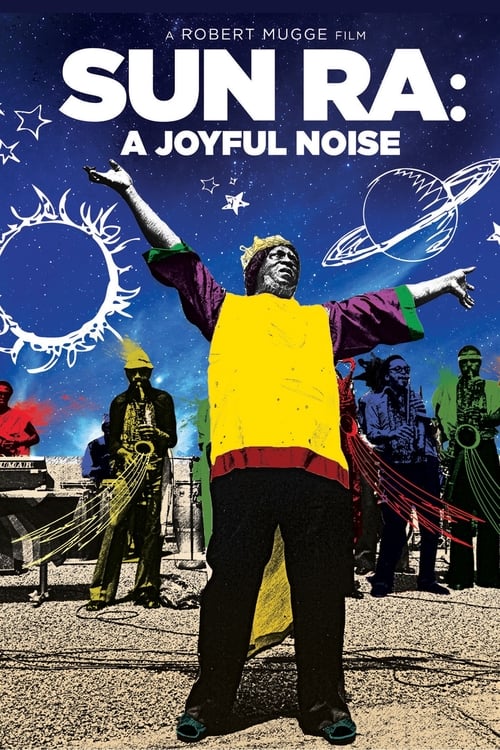
Sun Ra: A Joyful Noise
1980
No user ratings available yet
Representation score: 6.2 out of 10

Representation Score
Good
1966
Not RatedDirector
Phill Niblock
Runtime
17 minutes
Average Rating
No ratings yetNew Showbiz Analysis
The film excels in disrupting conventional cinematic hierarchies by highlighting the Sun Ra Arkestra and Afrofuturist aesthetics. It centers Black creative ability to act and subverts racialized binaries through experimental techniques. However, the film lacks traditional character-driven narratives, limiting the explicit depiction of specific identities like LGBTQ+ or disability. Its abstract nature means social representation is often conveyed through subtext rather than direct portrayal. Ultimately, the film succeeds as a cosmic, multi-layered exploration. It challenges Western notions of space, time, and identity through experimental methods, favoring a non-traditional, spiritual perspective.
Category Breakdown
The film emphasizes musicality and avant-garde expressions rather than direct representations of LGBTQ+ identity. Its unconventional approach often aligns with non-normative ways of expressing identity.
By focusing on hands, bodies, and instruments, the film dismantles traditional gender roles typically associated with performance. This approach avoids reinforcing conventional gender hierarchies.
The film highlights the Sun Ra Arkestra, emphasizing Black creative ability to act and Afrofuturist expression. The post-processing turns black to white, subverting racialized binaries.
The film adopts anti-Western, interstellar themes over earthly narratives. It reflects the Arkestra’s philosophy of spiritual, communalism through an abstract lens.
There is no evidence to suggest that disability serves as a central theme or specific point of focus in this experimental work.
Present on Screen
Limited or Absent
Official Synopsis
Multi-faceted artist Phil Niblock captures a brief moment of an interstellar communication by the Arkestra in their prime. Black turns white in a so-called negative post-process, while Niblock's camera focuses on microscopic details of hands, bodies and instruments. A brilliant tribute to the Sun King by another brilliant supra-planetary sovereign. (Eye of Sound)
1980
1967
1986
1981
1959
1970

2002
1974
No reviews yet. Be the first to share your thoughts on this movie!
Use the rating form above to leave a star rating and optional review.