
Fric-Frac
1939
No user ratings available yet
Diversity score: 2.4 out of 10
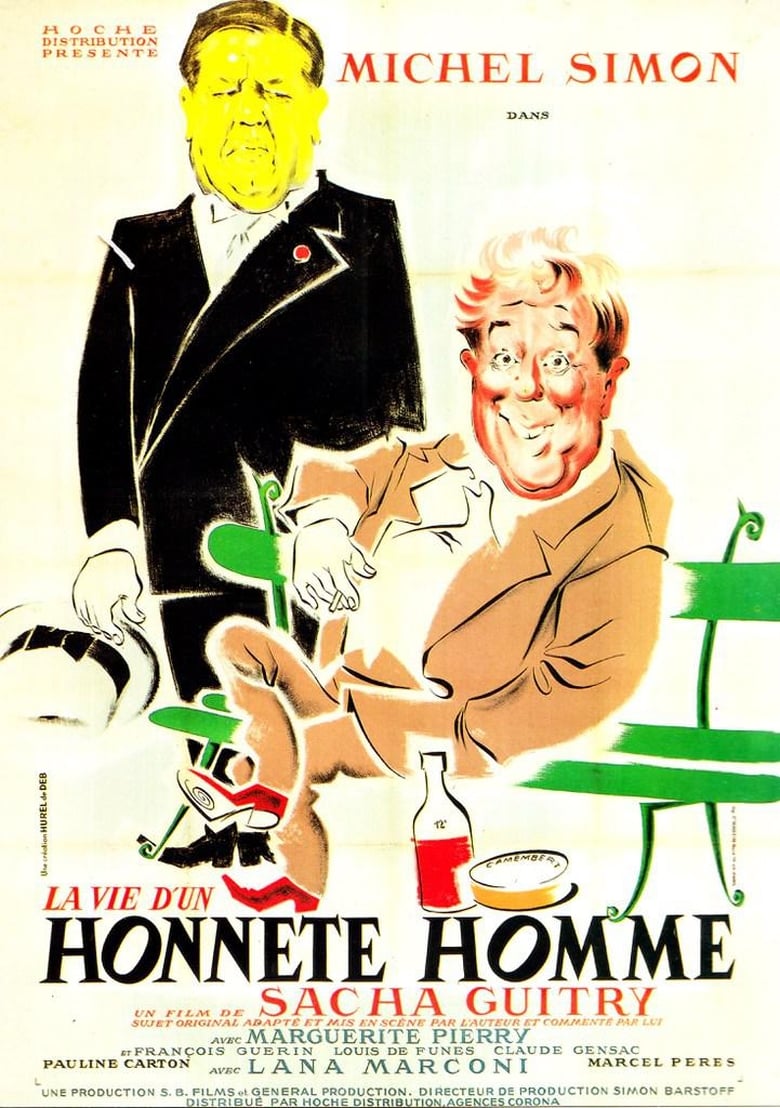
1953
Director
Sacha Guitry
Runtime
93 minutes
Average Rating
No ratings yetSynopsis
La Vie d'un honnête homme English: The Virtuous Scoundrel, is a French comedy drama film from 1953, directed by Sacha Guitry, written by Sacha Guitry, starring Michel Simon and Louis de Funès.
Overall Score
Limited
Category Breakdown
LGBTQ+ Representation
The film operates within the conventional social frameworks of 1950s French cinema. There is no documented evidence of explicit LGBTQ+ identities or non-heteronormative narratives present.
Gender Representation
The title suggests a focus on the male experience and traditional notions of virtue. While Guitry uses wit to expose male hypocrisy, female agency remains unconfirmed.
Racial & Ethnic Diversity
The production reflects the homogeneous social landscape of mid-century European cinema. It lacks evidence of a diverse cast or the integration of varied ethnic perspectives.
Religious & Cultural Diversity
The narrative explores subjective morality and moral relativism. It deconstructs the concept of honesty, favoring personal conduct over strict religious or institutional dogma.
Disability Representation
There is no evidence that disability, neurodivergence, or chronic illness play a role in the character arcs or the central narrative.
Strengths
Areas for Improvement
AI Analysis
The film is a period-specific social comedy that prioritizes wit and the deconstruction of bourgeois manners. While it offers a nuanced look at moral relativism, it remains rooted in the traditional social structures of its era. Its primary strength lies in its intellectual subversion of social hierarchies through dialogue. However, the work lacks intersectional complexity and diverse casting, resulting in a narrow demographic focus. Ultimately, the film functions as a localized study of European social dynamics rather than a disruptive or inclusive piece of cinema.
1939
1954

1988
1962

1957
1956
1937
1936
1938
No reviews yet. Be the first to share your thoughts on this movie!
Use the rating form above to leave a star rating and optional review.