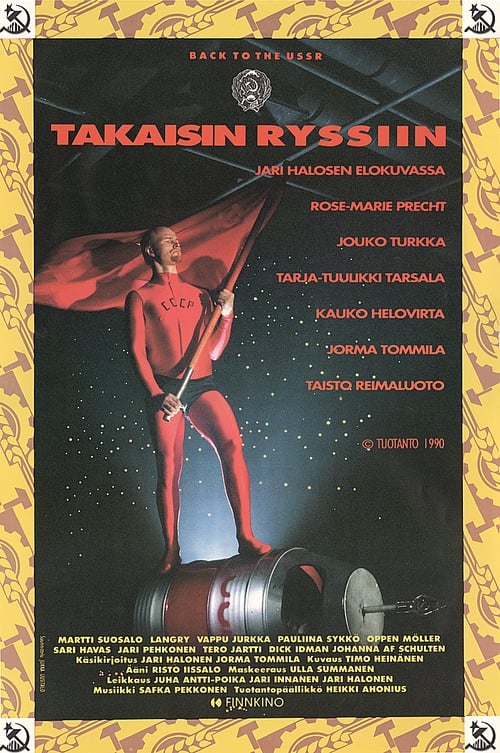
Back to the USSR
1992
No user ratings available yet
Diversity score: 4.2 out of 10

1995
Director
Mircea Daneliuc
Runtime
108 minutes
Average Rating
No ratings yetSynopsis
This Romanian dramatic comedy offers metaphorical commentary on life after Ceausescu's reign as it tells the story of a rural community turned topsy-turvy in their mad quest for the snails a prominent senator has requested for his dinner. The trouble begins when a rather imposing, pompous senator comes to visit a small rural Romanian town for a ribbon-cutting ceremony for their new hydro-electric dam. After he finishes his speech, the senator is accosted by a Swiss film crew eager to interview him. The senator is inordinately concerned with presenting a positive image of Romania to the world at large and so when he learns that he and the journalists are to stay at the same villa, does everything he came to make sure that they see nothing scandalous.
Overall Score
Fair
Category Breakdown
LGBTQ+ Representation
The film lacks explicit LGBTQ+ characters or narratives. The story focuses on class friction and political posturing rather than non-cisnormative identities.
Gender Representation
The narrative prioritizes masculine archetypes of authority, centered on a pompous senator. There is no evidence of significant female agency or subversion of gender hierarchies.
Racial & Ethnic Diversity
The cast is predominantly homogeneous, reflecting a localized study of Romanian rural life. Diversity is limited to the cultural collision between Eastern and Western European perspectives.
Religious & Cultural Diversity
The film excels at critiquing traditional institutions and political performativity. It effectively deconstructs the perceived superiority of institutional stability through satire.
Disability Representation
There is no information regarding the portrayal of physical or neurodivergent disabilities in this work.
Strengths
Areas for Improvement
AI Analysis
The Snails' Senator is a socio-political satire that prioritizes systemic critique over demographic breadth. It uses a localized Romanian setting to explore the friction between institutional power and the individual during a period of national transition. While the film lacks intersectional representation, it succeeds in its cultural commentary. It challenges the integrity of political institutions by portraying the pursuit of a sanitized national image as a hollow, performative act. Ultimately, the film's value lies in its ability to deconstruct power dynamics and the breakdown of social order rather than its inclusion of diverse identity groups.
1992

1974

2007
1963

1977

1988
1987
1972

1966

2003

2016

1990
No reviews yet. Be the first to share your thoughts on this movie!
Use the rating form above to leave a star rating and optional review.