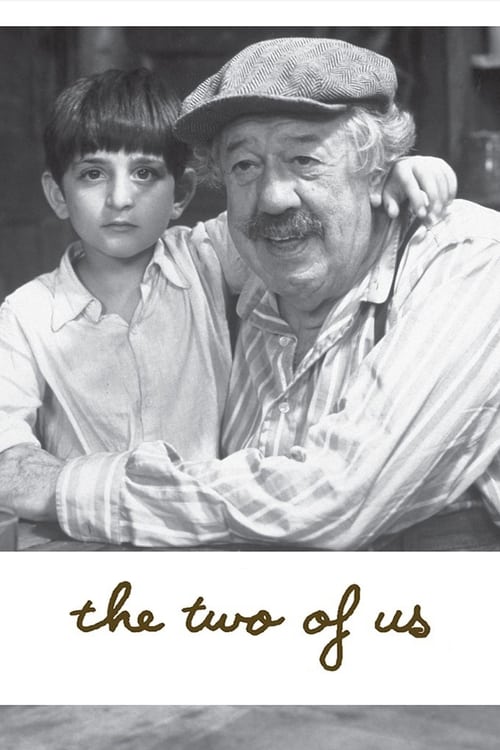
The Two of Us
1967
No user ratings available yet
Diversity score: 6.4 out of 10
1990
Director
Claude Berri
Runtime
100 minutes
Average Rating
No ratings yetSynopsis
After World War II, a small French village struggles to put the war behind as the controlling Communist Party tries to flush out Petain loyalists. The local bar owner, a simple man who likes to write poetry, who only wants to be left alone to do his job, becomes a target for Communist harassment as they try and locate a particular loyalist, and he pushes back.
Overall Score
Fair
Category Breakdown
LGBTQ+ Representation
The film focuses on post-war political and domestic tensions. It lacks explicit depictions of non-cisnormative identities or same-sex intimacy, remaining within a traditional heteronormative framework.
Gender Representation
Female characters possess significant agency and psychological autonomy. The film avoids patriarchal tropes, instead presenting men as fractured individuals struggling with the psychological fallout of the occupation.
Racial & Ethnic Diversity
The narrative reflects the demographic homogeneity of a 1940s French village. The cast is predominantly white, focusing on internal class and political fissures rather than racial diversity.
Religious & Cultural Diversity
The film excels at deconstructing traditional institutions and moral certainty. It uses political tensions to critique how institutional power can become oppressive to the individual.
Disability Representation
Psychological trauma serves as a thematic driver for character development. However, there is no specific exploration of neurodivergence or agency-driven representation for characters with physical disabilities.
Strengths
Areas for Improvement
AI Analysis
Claude Berri’s drama offers a sophisticated critique of social structures and moral certainty. It succeeds by dismantling traditional notions of familial stability and institutional authority, providing a nuanced look at human behavior under systemic pressure. However, the film is limited by its period-specific setting. The demographic homogeneity of a 1940s French village results in low scores for racial and LGBTQ+ representation, as the narrative stays within the era's traditional frameworks. Ultimately, the film is a study of psychological complexity rather than identity-driven representation. It prioritizes the internal wounds of war and political friction over the inclusion of diverse social identities.
1967

2018
1977

1995
1982

1959
1989

1966
1996
1975
1997
No reviews yet. Be the first to share your thoughts on this movie!
Use the rating form above to leave a star rating and optional review.