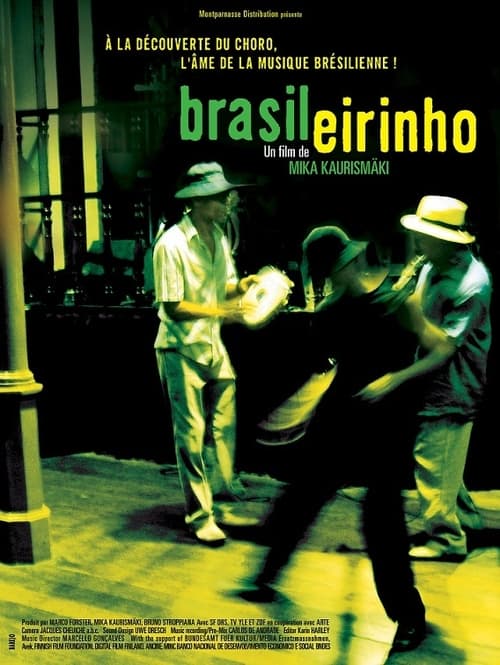
Brasileirinho
2005
No user ratings available yet
Diversity score: 6.9 out of 10

2016
TV-14Director
Jorge Martínez, Javier Limón, Javier Urosas
Runtime
72 minutes
Average Rating
No ratings yetSynopsis
This is the story of a trip between Spain and Latin America with a unique protagonist: the last guitar designed by the genius from Algeciras, which he never had the chance to unveil to the world. From Mallorca, Jerez de la Frontera and Lisbon to the United States and Latin America, this musical instrument has been travelling, keeping alive the magic of its master, Paco de Lucía. "La Maestro" flew from hand to hand; from those of Carlinhos Brown to those of Alejandro Sanz, stopping off at Tomatito’s or those of Muñequitos de Matanzas, delivering anecdotes, nostalgia and a lot of art along the way.
Overall Score
Good
Category Breakdown
LGBTQ+ Representation
The documentary focuses on the musical legacy of Paco de Lucía and the journey of his final guitar. It does not feature explicit LGBTQ+ character arcs or narratives.
Gender Representation
The narrative centers on a male maestro and his instrument, reflecting traditional musical histories. However, diverse musical contributors provide a broader scope beyond male-dominated leadership.
Racial & Ethnic Diversity
The film highlights intersectional movement by tracing the guitar from Spain to Latin America and the US. It features artists like Carlinhos Brown and Muñequitos de Matanzas.
Religious & Cultural Diversity
The film celebrates a transnational musical exchange that deconstructs boundaries between Europe and Latin America. It frames cultural heritage as a shared, evolving global entity.
Disability Representation
There is no mention of subjects or characters navigating visible or invisible disabilities within the film's narrative.
Strengths
Areas for Improvement
AI Analysis
Flight of the Guitar: Dreaming of Paco de Lucía is a sophisticated study of cultural interconnectedness. Rather than focusing on identity politics, it uses a musical instrument as a vessel for global, multi-ethnic dialogue. The film successfully disrupts conventional musical history by framing the Spanish guitar as a bridge between cultures rather than a symbol of nationalistic pride. The documentary excels at portraying the movement of art across diverse geographies. By following the instrument from Spain to the United States and Latin America, it challenges Western cultural hegemony through the lens of musical legacy. While the film lacks specific representation regarding LGBTQ+ identities or disabilities, its strength lies in its ability to showcase a borderless, transnational exchange of art and influence.
2005
1964

2017

2014

2016
2010
2016
2004
2003
1993

2012

2017
No reviews yet. Be the first to share your thoughts on this movie!
Use the rating form above to leave a star rating and optional review.