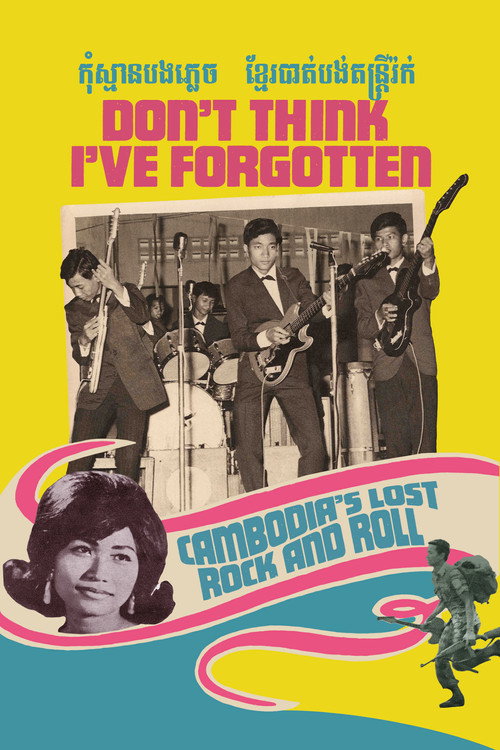
Don't Think I've Forgotten: Cambodia's Lost Rock and Roll
2014
No user ratings available yet
Diversity score: 7.0 out of 10

1993
Director
Tony Gatlif
Runtime
103 minutes
Average Rating
No ratings yetSynopsis
Latcho Drom is a vista of the music, culture, and journey of the Romani people—from their homeland of India, to Europe and Southwest Asia.
Overall Score
Good
Category Breakdown
LGBTQ+ Representation
The film functions as a non-narrative musical documentary focused on ethnic heritage. It contains no evidence of LGBTQ+ characters or narratives addressing non-cisnormative identities.
Gender Representation
The documentary touches on familial dynamics through communal musicality. While it avoids reinforcing patriarchal leadership, it lacks explicit subversion of gender hierarchies to achieve a higher score.
Racial & Ethnic Diversity
This work is an exceptional study in ethnic agency. By tracing Romani migration from India through Europe, it disrupts the Eurocentric gaze and asserts a distinct, non-Western identity.
Religious & Cultural Diversity
The film celebrates itinerant, semi-nomadic lifestyles that exist outside sedentary capitalism. It reframes cultural 'otherness' as a source of profound depth and resilience through communal heritage.
Disability Representation
There is no significant evidence regarding the portrayal of visible or invisible disabilities within the documentary's focus.
Strengths
Areas for Improvement
AI Analysis
Tony Gatlif’s documentary is a powerful act of cultural preservation. By centering the Romani people and their musical journey from India to Europe, the film successfully deconstructs Western-centric historical narratives. It moves beyond a mere study of a marginalized group, allowing them to drive their own musical legacy. However, the film's impact is specialized. Because it focuses on ethnographic and musical traditions, it does not engage with contemporary social dialogues regarding LGBTQ+ identities or specific gendered power struggles. This narrow focus limits its breadth in terms of social intersectionality. Ultimately, the film's value lies in its ability to replace a dominant cultural monologue with a complex, multi-ethnic dialogue. It is a vital piece of cinema for anyone seeking to understand Romani identity outside of mainstream Western structures.
2014

2006
2009
2005
2017
2015
2016
2016

2017
2001
2007
2016
No reviews yet. Be the first to share your thoughts on this movie!
Use the rating form above to leave a star rating and optional review.