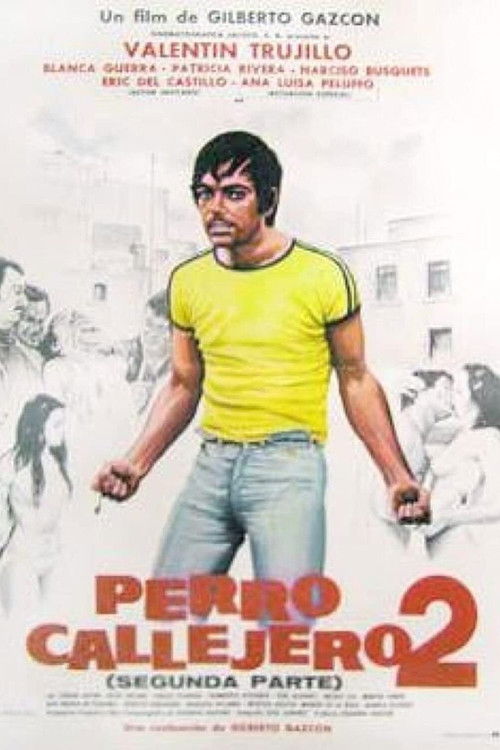
Perro callejero 2
1981
No user ratings available yet
Diversity score: 5.4 out of 10

1988
Director
Roberto Bodegas
Runtime
111 minutes
Average Rating
No ratings yetSynopsis
The story of El Nani, a juvenile delinquent from the years of the Transition, whose disappearance in a police station after an interrogation has not yet been clarified, putting the accent on the denunciation of police brutality and speculating on the outcome of the story. A story that mixes political denunciation and social chronicle of an era.
Overall Score
Fair
Category Breakdown
LGBTQ+ Representation
The film lacks explicit evidence of non-heteronormative identities or same-sex intimacy. The narrative focus remains centered on systemic institutional critique and juvenile delinquency.
Gender Representation
The film focuses on police brutality and political denunciation, which disrupts traditional authority. However, there is no specific evidence of female agency or the subversion of gender hierarchies.
Racial & Ethnic Diversity
As a social chronicle of the Spanish Transition, the film explores friction between marginalized populations and state authority. It likely emphasizes class-based or social-identity diversity.
Religious & Cultural Diversity
The narrative is highly progressive in its critique of Western institutions. It challenges the legitimacy of state authority by portraying the police as an oppressive force.
Disability Representation
There is no information regarding the portrayal of physical, sensory, or neurodivergent disabilities in this work.
Strengths
Areas for Improvement
AI Analysis
Matar al Nani serves as a potent social chronicle of the Spanish Transition, prioritizing systemic critique over individual identity markers. Its primary strength lies in its willingness to confront institutional power and denounce police brutality, positioning the state as an antagonist rather than a protector. However, the film appears limited in its exploration of intersectional identities. There is a notable absence of information regarding LGBTQ+ representation, gendered agency, or disability, suggesting a narrative scope that remains concentrated on male-dominated social and political spheres. Ultimately, the film succeeds as a tool for political denunciation. While it may lack diverse character-driven representation, it achieves progressive value by deconstructing the perceived infallibility of law enforcement and state institutions.
1981

1985

2009

1970

1977

2010

1982

1985

2010

1976
1980

1985
No reviews yet. Be the first to share your thoughts on this movie!
Use the rating form above to leave a star rating and optional review.