
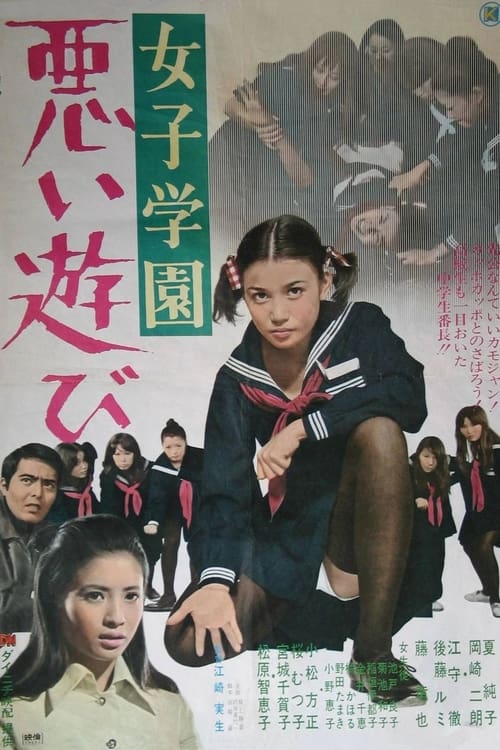
Girl Boss: Crazy Ball Game
1974
No user ratings available yet
Representation score: 5.2 out of 10
Representation Score
Fair
1970
Director
Mio Ezaki
Runtime
84 minutes
Average Rating
No ratings yetNew Showbiz Analysis
Dangerous Games (1970) is a study of institutional disruption centered on an all-female academic environment. Its primary strength lies in its focus on women's ability to drive the story and the subversion of established school hierarchies. While the film explores female-led power struggles and social instability, it lacks diversity in terms of race and disability. The setting suggests a homogeneous demographic, offering little in the way of characters who reflect more than one aspect of diversity. Ultimately, the film functions as a critique of authority, using the breakdown of social norms and the infiltration of criminal elements to challenge conventional stability.
Category Breakdown
The film hints at non-traditional interpersonal dynamics through mentions of seduction within the all-female school. However, it is unclear if these moments drive identity-focused narratives or serve purely as plot devices.
The story centers on female leadership and ability to act, moving away from passive female archetypes. By focusing on brawls and power struggles, the film challenges traditional gender roles often seen in period dramas.
Set in a Japanese middle school, the narrative appears to focus on a homogeneous social group. There is no evidence of multi-ethnic casting or diverse racial backgrounds.
The plot explores the disruption of school authority and social discipline. It uses the breakdown of institutional order and anti-social behavior to drive its central narrative.
The provided material contains no information regarding the inclusion of characters with visible or invisible disabilities.
Present on Screen
Limited or Absent
Official Synopsis
Drama is afoot at Shirobara Middle School when the bold Henmi Ryoko transfers into Class A, 9th Grade. She immediately picks a fight with, Masuda, the head of the preparation committee. The girls' battle for control of the gang soon grows out of control as it sweeps up the entire school. Brawls. Seduction. Yakuza. And more!
1974
2001

1997
1996
1977
1971

1970
1956
No reviews yet. Be the first to share your thoughts on this movie!
Use the rating form above to leave a star rating and optional review.