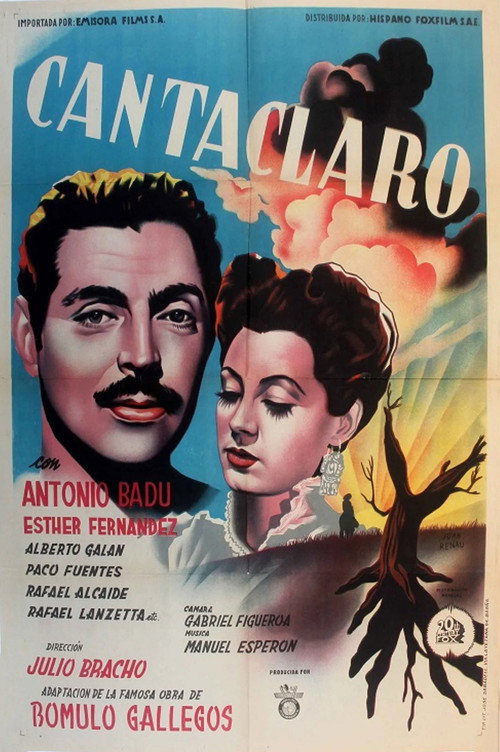
Cantaclaro
1946
No user ratings available yet
Representation score: 2.1 out of 10
Representation Score
Limited
1950
Not RatedDirector
Ismael Rodríguez
Runtime
128 minutes
Average Rating
No ratings yetNew Showbiz Analysis
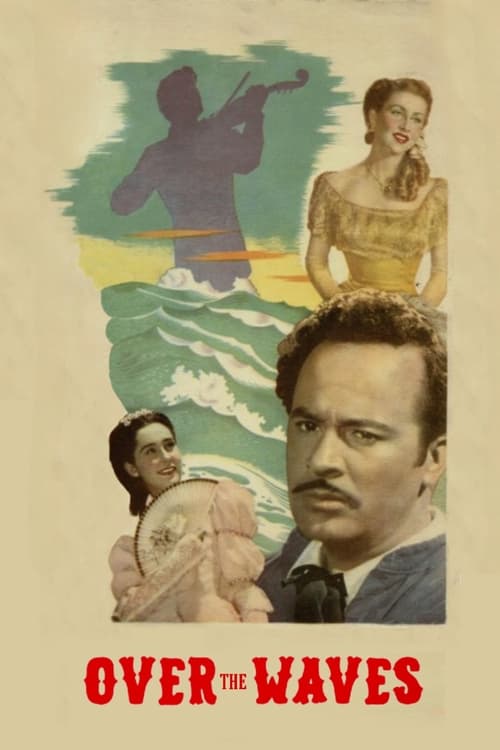
Over the Waves is a significant cultural artifact that prioritizes Mexican national identity and the struggles of the working class. By centering the life of musician Juventino Rosas, the film challenges Western-centric cinematic dominance and highlights regional musical heritage. However, the film remains bound by the social frameworks of 1950. It lacks complexity in representing diverse identities, relying on traditional gender roles and romantic structures common to the Golden Age of Mexican cinema. Ultimately, the work finds its strength in its focus on systemic hardship and cultural ability to act, even while adhering to the era's conventional social hierarchies.
Category Breakdown
The film follows the heterosexual romantic structures typical of 1950s musical dramas. There are no characters with non-traditional gender identities or same-sex relationships.
The story focuses on a male protagonist named Juventino Rosas. Female characters likely fill traditional roles as romantic interests or maternal figures within the established gender hierarchy.
The film centers on a non-Anglo-Saxon cast and delves into Mexican cultural identity. By highlighting a domestic figure of national importance, it emphasizes regional cultural ability to act.
The story critiques socioeconomic disparities through the lens of poverty and misfortune. Traditional institutions like family and religion likely serve as stabilizing forces within the narrative.
There is no evidence of characters with visible or invisible disabilities playing central roles in the plot.
Present on Screen
Limited or Absent
Official Synopsis
The life of the musician Juventino Rosas, who despite his talent lived an existence of misfortune and poverty.
1946

1981
1957

1954

1938

1954

1940

1942
No reviews yet. Be the first to share your thoughts on this movie!
Use the rating form above to leave a star rating and optional review.