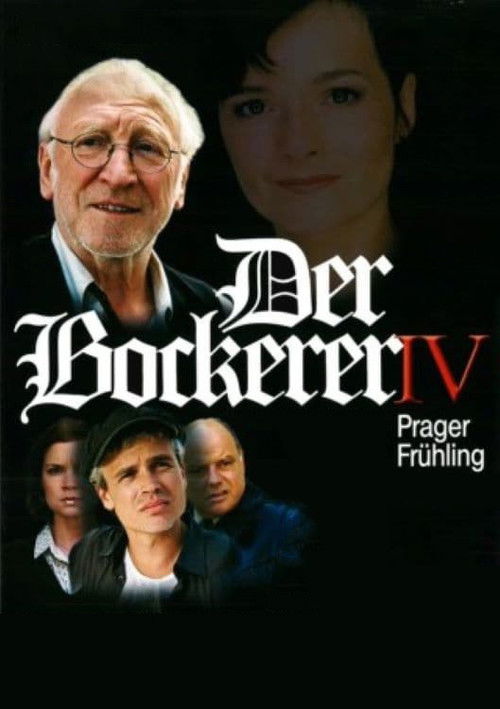
Der Bockerer IV - Prager Frühling
2003
No user ratings available yet
Representation score: 3.1 out of 10
Representation Score
Limited
1996
Director
Franz Antel
Runtime
92 minutes
Average Rating
No ratings yetNew Showbiz Analysis
The film functions as a traditional historical drama set in the specific geopolitical realities of post-war Vienna. It prioritizes localized survival stories and conventional romantic structures over challenging social hierarchies. While the inclusion of a Russian interpreter adds an ethnic layer to the narrative, the scope remains focused on European tensions. Character dynamics reinforce traditional roles, particularly through Bockerer’s position as a resourceful provider and protector. Ultimately, the work adheres to established narrative norms. It offers a glimpse into life under Allied occupation but does not utilize diverse casting or explore non-traditional gender identities.
Category Breakdown
The film focuses on a heterosexual relationship between Gustl and Elena, following typical courtship patterns without delving into non-traditional gender identities.
Bockerer plays a key role as a decision-maker and protector. Elena has significant stakes, but her role is initially tied to the necessity of marriage.
The story centers on the local Austrian population and Soviet occupiers. Elena adds an ethnic dimension, but the cast lacks multi-ethnic diversity.
The narrative explores survival and resistance within a specific post-war European context. It emphasizes localized morality and the stability of the family unit.
There are no visible or invisible disabilities mentioned as central to the character arcs or the plot progression.
Present on Screen
Limited or Absent
Official Synopsis
Vienna, 1947. Bockerer and his wife Binerl have survived the war, though his butcher's shop was destroyed by bombs. Karl Bockerer opens up a new establishment in the center of the city. Post-war Vienna is divided into four zones in which the Allies run things and ensure that law and order prevails. This is the story of two lovers: Gustl, just returned form a POW camp, and the Russian interpreter Elena. Bockerer becomes the patron of their love. Elena's father was executed by Stalin, and the only way she can escape a similar fate is to marry an Austrian. Bockerer "buys" a husband for Elena and, full of tricks as ever, he succeeds in pulling the wool over the Russian occupier's eyes.
2003

1975
1981
1999
1977

2019
2000

2019
No reviews yet. Be the first to share your thoughts on this movie!
Use the rating form above to leave a star rating and optional review.