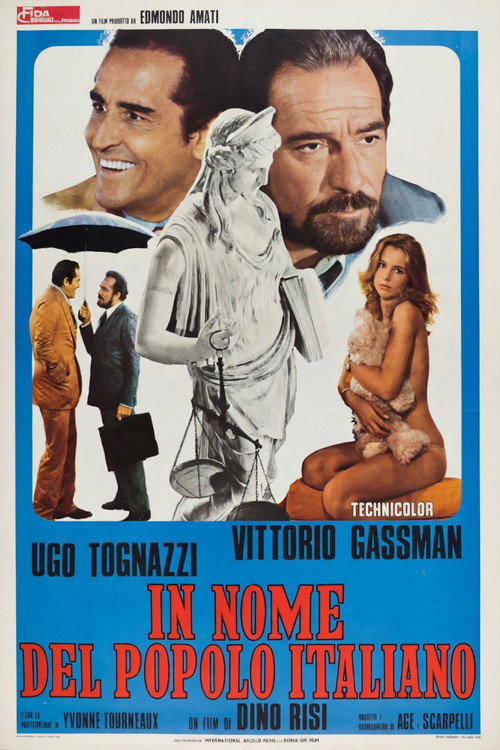
In the Name of the Italian People
1971
No user ratings available yet
Representation score: 3.9 out of 10

Representation Score
Fair
1984
Director
Alberto Sordi
Runtime
108 minutes
Average Rating
No ratings yetNew Showbiz Analysis
Alberto Sordi’s satire prioritizes systemic inquiry over identity-driven representation. The film functions as a socio-political critique, shifting focus from individual villains to the corruption embedded within the Italian social fabric. While the film lacks diversity in terms of gender, race, and LGBTQ+ identities, it excels in cultural representation. It destabilizes trust in established power structures by questioning whether the individual upholder of justice is the true anomaly. Ultimately, the work uses the protagonist's struggle to explore moral relativism and the friction between personal ethics and institutional dysfunction.
Category Breakdown
The film does not include any explicit LGBTQ+ characters or narratives. The story focuses on political and judicial corruption rather than interpersonal relationships centered around identity.
The narrative centers on a male-dominated judicial and political system where the protagonist embodies traditional masculine ideals of power and authority.
Set within a specific 1984 Italian context, the film reflects the demographic homogeneity typical of domestic dramas from that era. There is no indication of significant ethnic diversity.
The film strongly critiques traditional Western institutions. It portrays legal and political systems as inherently compromised and corrupt, challenging their sanctity.
There are no visible or invisible disabilities mentioned within the character arcs or plot drivers. The narrative does not address disability as a central theme.
Present on Screen
Limited or Absent
Official Synopsis
The incorruptible judge Annibale Salvemini, starts investigating over a classic Italian business/politics/corruption affair. He start to operate, as usual, very strongly. He orders numberless arrests. But the reaction of counterparts won't take long. In fact his strong energetic manners, drive him unintentionally on the opposite situation. Who is the real guilty the judge or the corrupted Italian society?
1971

1964
1991

1989
1953
1978

1954
1972
No reviews yet. Be the first to share your thoughts on this movie!
Use the rating form above to leave a star rating and optional review.