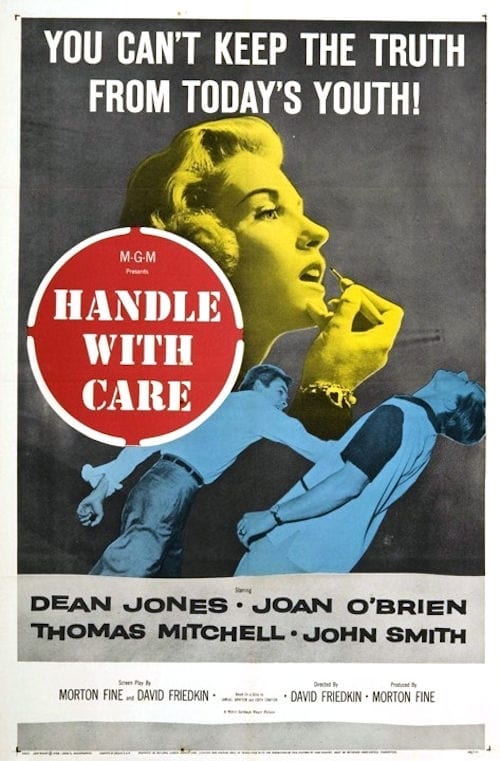
Handle with Care
1958
No user ratings available yet
Diversity score: 2.1 out of 10

1968
Director
Ray Milland
Runtime
101 minutes
Average Rating
No ratings yetSynopsis
Simon Crawford is a barrister whose daughter is killed in a hit-and-run accident. When his neighbor is also killed, evidence points to the barrister as the murderer.
Overall Score
Limited
Category Breakdown
LGBTQ+ Representation
The film lacks any discernible presence of LGBTQ+ characters or non-cisnormative identities. The social framework remains strictly traditional, offering no queer narratives or subtext.
Gender Representation
A female protagonist provides meaningful agency, driving the legal conflict through her testimony. However, the story remains constrained by a male-dominated legal environment typical of the era.
Racial & Ethnic Diversity
The cast is predominantly white, reflecting the demographic homogeneity of mid-20th-century legal dramas. There is no evidence of intentional racial blending or characters of color with significant agency.
Religious & Cultural Diversity
The narrative critiques institutional corruption and the misuse of power by local authorities. It focuses on individual corruption rather than a systemic deconstruction of broader Western institutions.
Disability Representation
There is no visible or invisible disability representation within the story. Characters with disabilities are neither central to the plot nor used as thematic devices.
Strengths
Areas for Improvement
AI Analysis
Hostile Witness functions as a period-specific legal thriller that prioritizes traditional dramatic structures. While it avoids total passivity for its female lead, it fails to challenge the broader social hierarchies of its time. The film's primary strength lies in its critique of local authority and institutional integrity. However, this focus on individual corruption prevents a deeper exploration of systemic social or racial issues. Ultimately, the production is a product of its era, characterized by a lack of intersectional depth and a predominantly white, heteronormative cast.
1958
1963

1966

1951
1954

1958

1962
1951

1967

1993
1960

1960
No reviews yet. Be the first to share your thoughts on this movie!
Use the rating form above to leave a star rating and optional review.