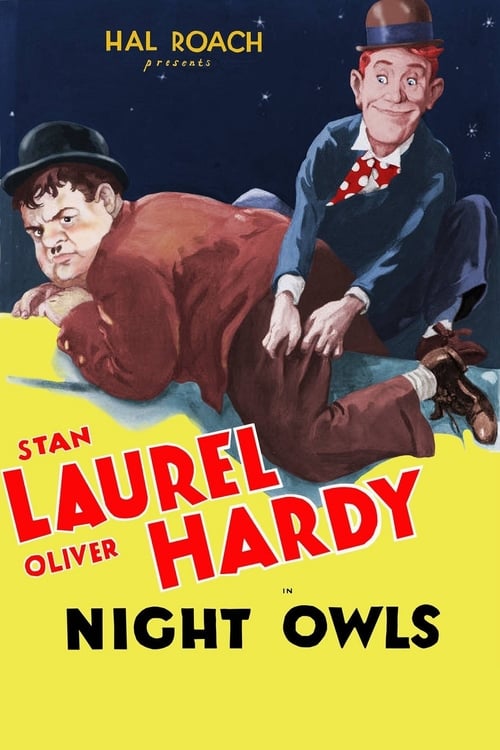
Night Owls
1930
No user ratings available yet
Representation score: 1.6 out of 10

Representation Score
Minimal
1930
Director
James Parrott
Runtime
35 minutes
Average Rating
No ratings yetNew Showbiz Analysis
James Parrott’s comedy is a product of the early sound era, focusing on slapstick and situational farce rather than social commentary. The narrative structure prioritizes professional hierarchies and traditional comedic clichés over the inclusion of underrepresented identities. The film operates within the demographic and social constraints of 1930s American cinema, emphasizing civic duty and the maintenance of order through established social structures.
Category Breakdown
The film does not include any LGBTQ+ characters or representations of non-straight relationships. It relies on traditional comedic archetypes common to the 1930s.
The story focuses on a male police officer and his male superior. It does not challenge traditional gender roles or provide diverse gender portrayals.
The production follows the homogeneous casting standards of early Hollywood. It lacks a diverse cast or representations of non-Anglo-Saxon backgrounds.
The plot reinforces traditional institutional stability through themes of law and order. It does not critique Western institutions or cultural norms.
There is no mention of characters with visible or invisible disabilities. The narrative does not address neurodivergence or physical impairments.
Present on Screen
Limited or Absent
Official Synopsis
Police officer Edgar Kennedy is warned by his police chief to make arrests to stop a burglary epidemic on his patch or face the sack.
1930
1940
1933
1931
1916
1937
1939
1929
No reviews yet. Be the first to share your thoughts on this movie!
Use the rating form above to leave a star rating and optional review.