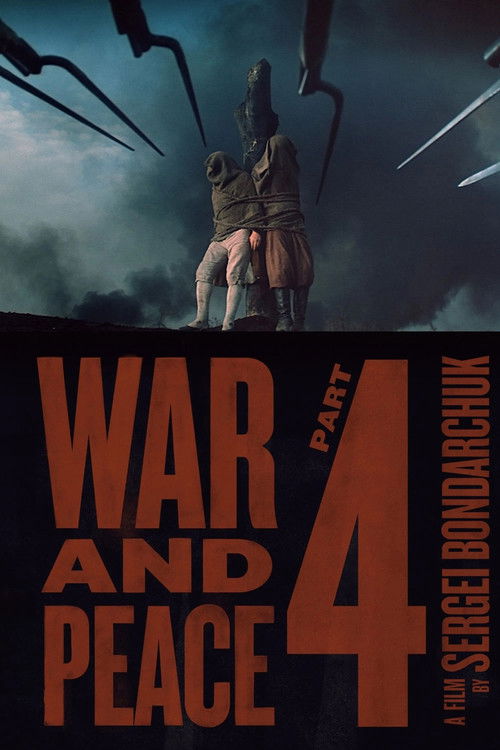
War and Peace, Part IV: Pierre Bezukhov
1967
No user ratings available yet
Representation score: 2.2 out of 10
Representation Score
Limited
1967
Not RatedDirector
Sergey Bondarchuk
Runtime
81 minutes
Average Rating
No ratings yetNew Showbiz Analysis
Bondarchuk’s epic centers on the tension between individual experiences and the overwhelming historical forces. It prioritizes historical accuracy and nationalistic themes over modern diversity. The film effectively challenges Western imperialism by questioning its expansionist policies. However, it remains tied to the social hierarchies and ethnic uniformity of the Napoleonic period. Ultimately, the work aims to evoke a sense of collective struggle and historical inevitability rather than disrupting contemporary social norms or promoting individual ability to act.
Category Breakdown
The film follows the strict heterosexual and cisgender norms of the early 19th century. There is no indication of non-binary gender identities or same-sex relationships.
Female characters such as Natasha Rostova bring emotional depth but are confined to domestic roles. Male characters dominate military and political positions, reinforcing traditional gender roles.
The cast is primarily white and of Anglo-European descent, focusing on the European aristocracy. It explores Russian and French cultures within a largely homogeneous ethnic context.
The film criticizes Western imperialism by portraying the French invasion as disruptive. The frequent use of Russian Orthodox symbols highlights traditional institutional values.
There is no meaningful portrayal of visible or invisible disabilities. Characters experiencing physical injuries are shown as casualties of war without highlighting their unique identities.
Present on Screen
Limited or Absent
Official Synopsis
In 1812, as Napoleon's army invades Russia, Kutuzov asks Bolkonsky to join him as a staff officer, yet the prince requests a command in the field. Pierre sets out to watch the armies' impending confrontation. As the Battle of Borodino rages, he volunteers to assist in an artillery battery. Part three of the four-part adaptation of Leo Tolstoy's 1869 novel.
1967
1968
1966
1970
1966

1956

1968
1944
No reviews yet. Be the first to share your thoughts on this movie!
Use the rating form above to leave a star rating and optional review.