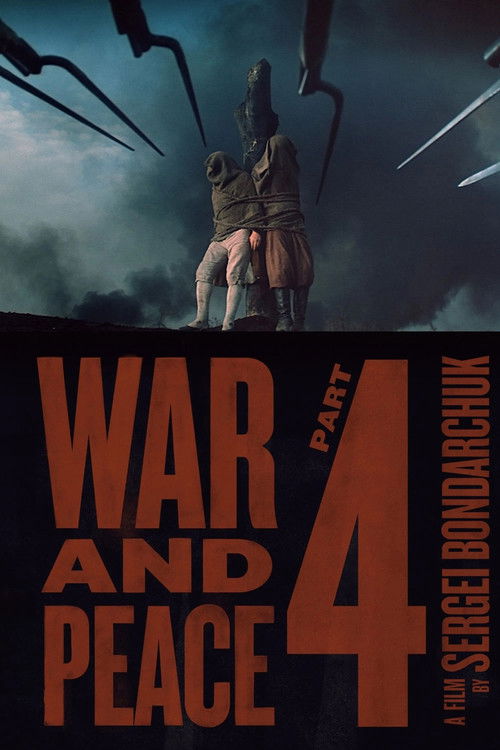
War and Peace, Part IV: Pierre Bezukhov
1967
No user ratings available yet
Representation score: 2.2 out of 10
Representation Score
Minimal
1966
Not RatedDirector
Sergei Bondarchuk
Runtime
98 minutes
Average Rating
No ratings yetNew Showbiz Analysis
This adaptation functions as a historical epic that prioritizes period accuracy and nationalistic themes. It reinforces the social, religious, and patriarchal hierarchies of the 19th century rather than challenging them. The film offers a sophisticated psychological study of its protagonists, but it does so through a traditional lens. The focus remains on preserving cultural identity and adherence to established social norms during a period of existential conflict. Ultimately, the work is a study of historical continuity, emphasizing the stability of family and social hierarchy in the face of foreign invasion.
Category Breakdown
The film strictly follows the social and moral codes of 19th-century Imperial Russia, with no depictions of queer subtext or non-straight relationships.
Natasha Rostova serves as the emotional center, but her role is limited by patriarchal structures and class expectations. The film explores female emotions without challenging traditional masculine leadership.
Casting is highly uniform, reflecting the Slavic identity of the Russian aristocracy and peasantry. The film prioritizes historical accuracy and national unity over racial diversity.
The narrative emphasizes the central roles of the landed aristocracy and the Russian Orthodox Church. These institutions are presented as the core of the social order.
There are no prominent depictions of visible or invisible disabilities that drive the narrative or provide character's ability to drive the story.
Present on Screen
Limited or Absent
Official Synopsis
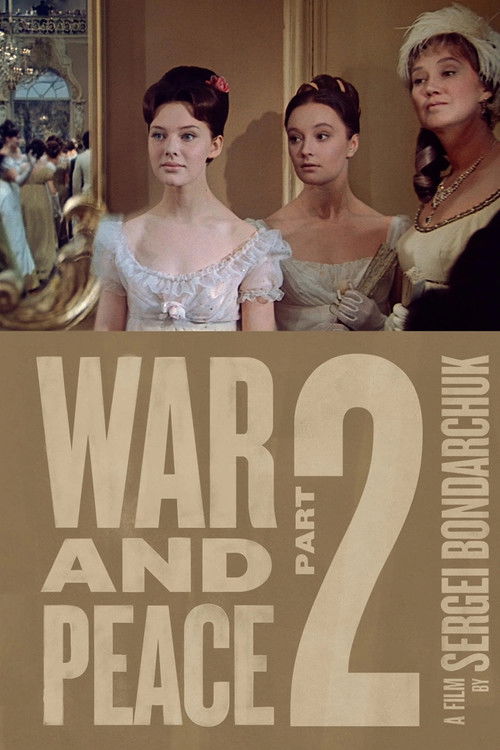
As 1809 nears its end, Natasha attends her first ball, where Andrei falls in love with her with the intent of marriage. However, as her father demands they wait, the prince travels abroad, leaving Natasha in desperate longing. But she meets Anatol Kuragin and forgets Andrei. Part two of the four-part adaptation of Leo Tolstoy's 1869 novel.
1967
1968
1967

1956
1966

1970
1970
1957
No reviews yet. Be the first to share your thoughts on this movie!
Use the rating form above to leave a star rating and optional review.