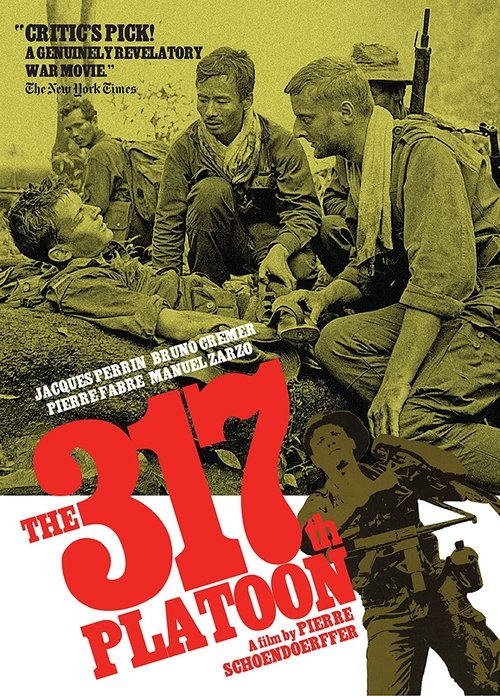
The 317th Platoon
1965
No user ratings available yet
Diversity score: 5.0 out of 10

1975
Director
Sergey Bondarchuk
Runtime
151 minutes
Average Rating
No ratings yetSynopsis
In July 1942, in the Second World War, the rearguard of the Russian army protects the bridgehead of the Don River against the German army while the retreating Russian troops cross the bridge. While they move back to the Russian territory through the countryside, the soldiers show their companionship, sentiments, fears and heroism to defend their motherland.
Overall Score
Fair
Category Breakdown
LGBTQ+ Representation
The film adheres to 1970s Soviet social norms. There is no presence of non-cisnormative identities or same-sex intimacy, focusing instead on heteronormative wartime companionship.
Gender Representation
Women are portrayed as resilient survivors and partisans rather than submissive figures. However, the narrative remains centered on masculine combat roles and traditional wartime hierarchies.
Racial & Ethnic Diversity
The cast reflects the multi-ethnic reality of the Soviet Union, including Russians and Ukrainians. It depicts a unified ethnic front against an external aggressor.
Religious & Cultural Diversity
The film centers on a secular, anti-capitalist worldview. It frames morality through communal duty and state survival rather than individualist or religious ethics.
Disability Representation
Disability is depicted through the lens of physical injury and wartime trauma. These portrayals serve as markers of war's brutality rather than exploring individual agency.
Strengths
Areas for Improvement
AI Analysis
Sergey Bondarchuk’s epic focuses on the collective struggle of the Soviet people during the Second World War. It prioritizes a communal, state-aligned narrative over individualist heroism, offering a distinct ideological perspective that challenges Western-centric cinematic norms. The film excels in its cultural and ethnic authenticity, capturing the multi-ethnic composition of the Soviet defense and a strong secular, collectivist worldview. It avoids many tropes of submissive femininity by showing women as hardened survivors. However, the film lacks modern intersectional representation. It provides no LGBTQ+ visibility and treats disability primarily as a consequence of combat trauma rather than a nuanced exploration of lived experience.
1965
2013
2014
1981

2018
1945

2020
1959
1967
No reviews yet. Be the first to share your thoughts on this movie!
Use the rating form above to leave a star rating and optional review.