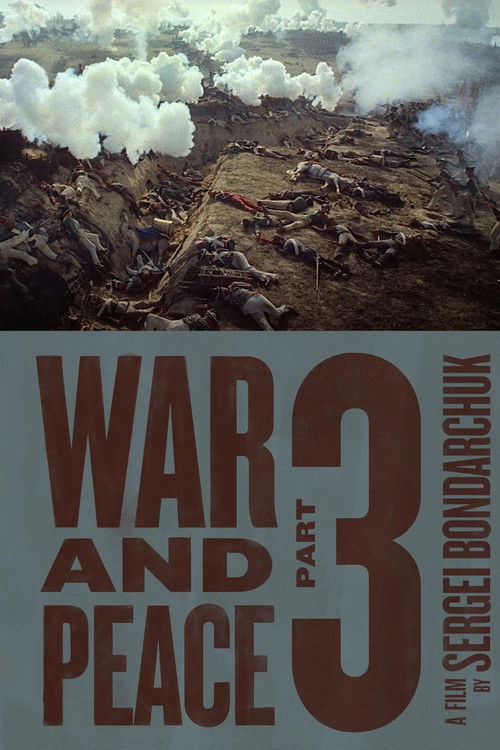
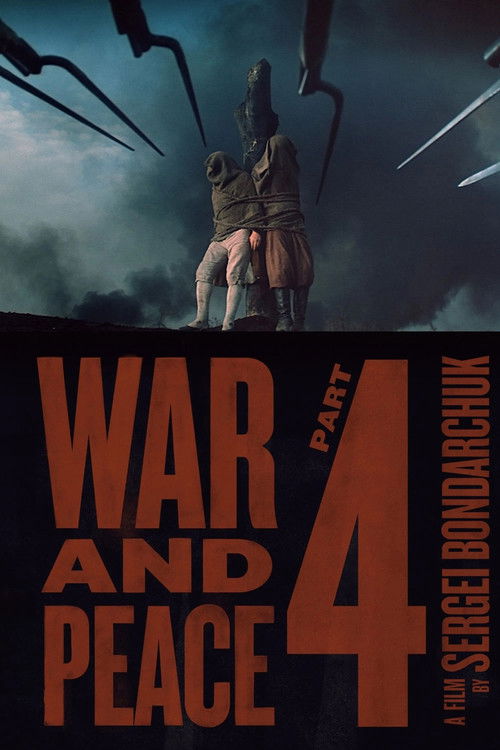
War and Peace, Part III: The Year 1812
1967
No user ratings available yet
Representation score: 3.3 out of 10
Representation Score
Limited
1967
Not RatedDirector
Sergey Bondarchuk
Runtime
96 minutes
Average Rating
No ratings yetNew Showbiz Analysis
Bondarchuk’s epic highlights the tension between individual ability to act and historical forces. It serves as a traditional period piece that upholds 19th-century social hierarchies. The film provides a sophisticated critique of class-based decadence but does so within a framework that reinforces established cultural and spiritual institutions. It explores the individual's struggle against history rather than disrupting social norms. Overall, the production emphasizes period-accurate depictions of the Napoleonic era, resulting in a narrative that lacks modern characters who reflect more than one aspect of diversity or diverse identity perspectives.
Category Breakdown
The film strictly follows the social structures of 19th-century Russian aristocracy, which assumes everyone is straight and cisgender. There are no narratives or identities that challenge traditional sexual norms.
Female characters are often shown through the lens of aristocratic social utility and marriage. The story mainly focuses on Pierre's journey of spiritual growth through suffering.
The cast is predominantly white and Russian, reflecting the historical setting. The film prioritizes period accuracy over modern casting practices or diverse ethnic viewpoints.
The story is deeply connected to Orthodox Christian spirituality as a moral framework. It criticizes aristocratic decadence while staying rooted in traditional religious and nationalist values.
Wounded soldiers appear as visual reminders of war's devastation and historical realism. However, these characters have little influence on the main plot or themes.
Present on Screen
Limited or Absent
Official Synopsis
As Moscow is set ablaze by the retreating Russians, the Rostovs flee their estate, taking wounded soldiers with them, and unbeknownst to them, also Andrei. Pierre, dressed as a peasant, tries to assassinate Napoleon but is taken prisoner. As the French are forced to retreat, he's marched for months with the Grande Armée, until being freed by a raiding party. Part four of the four-part adaptation of Leo Tolstoy's 1869 novel.
1967
1968
1966
1970
1966

1956
2004
1961
No reviews yet. Be the first to share your thoughts on this movie!
Use the rating form above to leave a star rating and optional review.