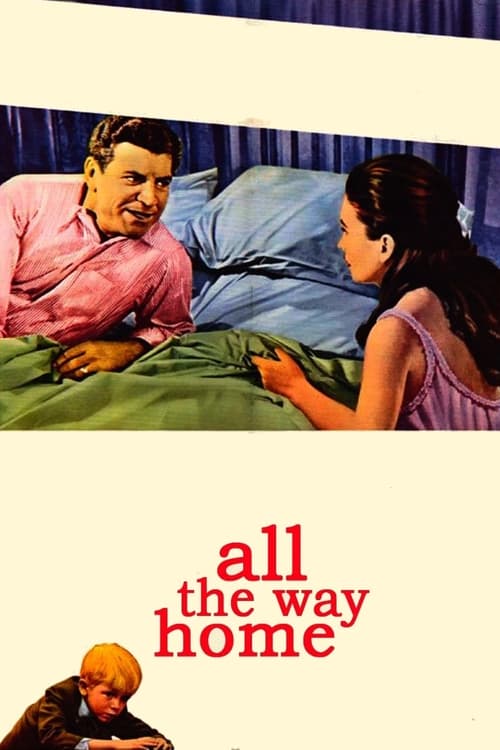
All the Way Home
1963
No user ratings available yet
Diversity score: 2.2 out of 10

1949
NRDirector
George Cukor
Runtime
112 minutes
Average Rating
No ratings yetSynopsis
Following the death of his only son, a ruthless businessman reflects on his life, his unhappy marriage and his questionable parenting skills.
Overall Score
Minimal
Category Breakdown
LGBTQ+ Representation
The film adheres strictly to mid-century heteronormative structures. There is no presence of non-cisnormative identities or same-sex intimacy within the narrative.
Gender Representation
The story operates within a patriarchal framework, centering male authority. Female characters are largely confined to domestic and social spheres rather than positions of power.
Racial & Ethnic Diversity
The cast depicts a homogeneous, white, upper-class British social stratum. The film lacks racial blending or non-Anglo-Saxon perspectives.
Religious & Cultural Diversity
The narrative reinforces conventional Western values regarding class and family duty. It focuses on personal integrity rather than challenging systemic or capitalist structures.
Disability Representation
No visible or invisible disabilities are integrated into the character arcs. The focus remains entirely on the psychological tensions of the central family.
Strengths
Areas for Improvement
AI Analysis
George Cukor’s drama is a sophisticated study of emotional repression and generational conflict. However, it functions as a closed ecosystem of the socioeconomic elite, offering very little in the way of intersectional complexity. The film reinforces the social hierarchies of 1949, focusing on the psychological weight of paternalism. While it provides a nuanced look at character dynamics, it does so through a lens that maintains the status quo. Ultimately, the work lacks engagement with progressive themes or the subversion of established social institutions, remaining a narrow depiction of the British upper class.
1963
1946
1945
1941

1951

1957

1946
1961
1943
1998

1952
1934
No reviews yet. Be the first to share your thoughts on this movie!
Use the rating form above to leave a star rating and optional review.