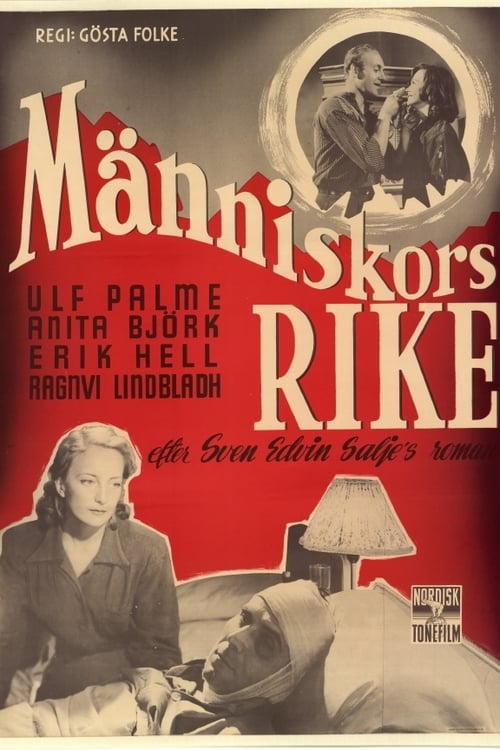
Realm of Man
1949
No user ratings available yet
Diversity score: 2.5 out of 10

1947
NRDirector
Brian Desmond Hurst
Runtime
103 minutes
Average Rating
No ratings yetSynopsis
Life becomes a tragedy for the wife of an Irish heir to a 19th-century family feud and fortune.
Overall Score
Limited
Category Breakdown
LGBTQ+ Representation
The film adheres to the heteronormative structures of its 1947 production and mid-19th-century setting. There is no evidence of same-sex intimacy or non-cisnormative identities.
Gender Representation
Female agency appears tethered to marital status and familial inheritance. The narrative follows a traditional hierarchy where the protagonist's tragedy is defined by her role as an heir's wife.
Racial & Ethnic Diversity
Set in rural Ireland, the film features a predominantly white, ethnically homogeneous cast. It focuses on localized Irish identity without utilizing diverse ethnic intersections.
Religious & Cultural Diversity
The story explores class tensions and land ownership within a traditional Irish social fabric. Religious and traditional institutions serve as a backdrop for the central family feud.
Disability Representation
There is no documented evidence regarding the portrayal of physical or neurodivergent disabilities in this production.
Strengths
Areas for Improvement
AI Analysis
Hungry Hill functions as a traditional regional drama that prioritizes historical realism over the subversion of social norms. The film reinforces the established hierarchies of its 19th-century Irish setting, focusing on localized identity and inherited social structures. The narrative lacks intersectional depth, presenting a homogeneous cast and a gendered framework where female characters are defined by their domestic and marital connections. While it explores socioeconomic struggles through class and land disputes, it does not challenge the era's conventional power dynamics. Ultimately, the film is a product of its time, reflecting the social constraints of both its period setting and its mid-century production era.
1949

1949

1973
1948
1951
1947
1958
1921

1951

1931
1918
1945
No reviews yet. Be the first to share your thoughts on this movie!
Use the rating form above to leave a star rating and optional review.