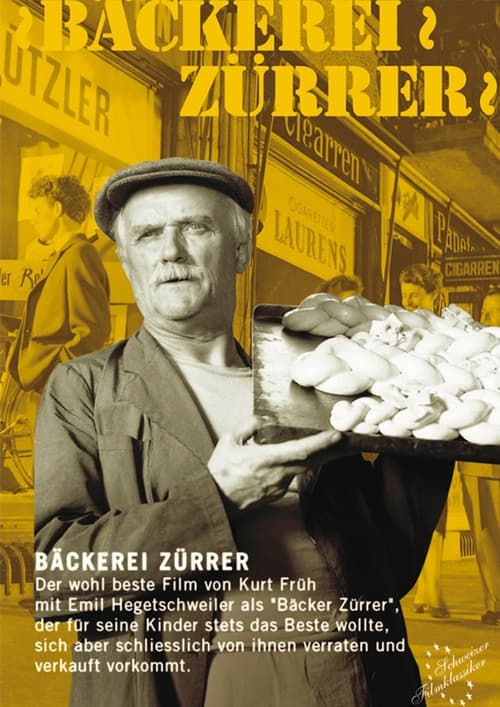
The Zürrer Bakery
1957
No user ratings available yet
Representation score: 2.0 out of 10

Representation Score
Limited
1951
Director
Grigoris Grigoriou
Runtime
83 minutes
Average Rating
No ratings yetNew Showbiz Analysis
Bitter Bread is a mid-century social realist drama that prioritizes the traditional family unit. The narrative structure adheres to the socio-cultural hierarchies of the early 1950s, focusing on the struggles of the working class. While the film offers insights into economic hardship and labor, it does not challenge conventional social expectations. The roles of provider and protector are strictly gendered, shifting from father to son. Ultimately, the film serves as a localized study of survival within a specific ethnic and social context, lacking diverse representation.
Category Breakdown
The film does not depict any non-straight relationships or same-sex intimacy. It centers on a traditional nuclear family typical of 1950s cinema.
While the wife helps raise the children, the narrative follows a patriarchal path. Leadership shifts from the father to the son after the father's death.
The production reflects the homogeneous demographic of its Greek setting. It focuses on a specific socio-economic class without showing a multi-ethnic cast.
The film highlights traditional Mediterranean values regarding family duty and social stability. The struggle for survival is framed as a personal battle rather than a systemic issue.
The film does not include any characters navigating physical or neurodivergent disabilities.
Present on Screen
Limited or Absent
Official Synopsis
A poor builder tries, with the help of his wife, to raise his three children. When he gets killed in an accident at the construction site, his oldest son undertakes the responsibility of providing for the family, facing all difficulties.
1957
1936
1942
1945

1958

1960
1976

1939
No reviews yet. Be the first to share your thoughts on this movie!
Use the rating form above to leave a star rating and optional review.