
My Man and I
1952
No user ratings available yet
Representation score: 3.7 out of 10
Representation Score
Fair
1948
Not RatedDirector
Ismael Rodríguez
Runtime
128 minutes
Average Rating
No ratings yetNew Showbiz Analysis
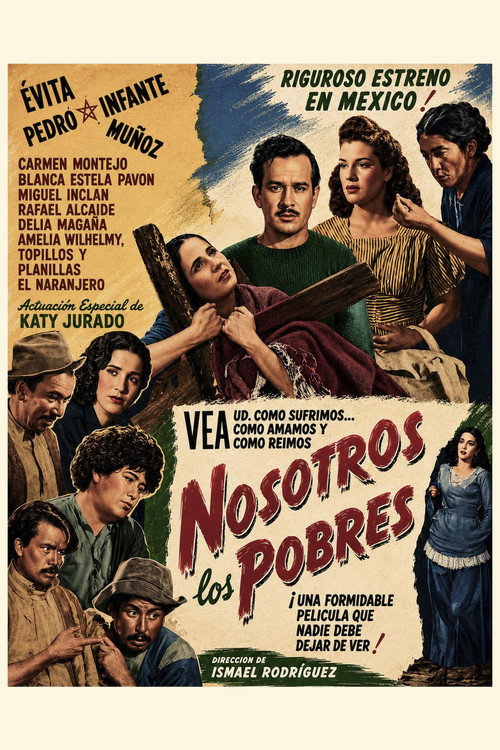
We the Poor is a foundational Mexican classic that centers the collective experience of the urban working class. It successfully shifts the focus from individual achievement to the shared ability to act of the underrepresented community. The film excels in its systemic critique, prioritizing communal survival over rigid legalistic codes. By framing poverty as a systemic failure rather than an individual one, it dismantles traditional bourgeois moral hierarchies. However, the film is limited by the era's social norms, lacking any LGBTQ+ representation or central depictions of disability. This keeps the overall diversity score moderate despite its strong cultural and racial authenticity.
Category Breakdown
The film follows the social norms of 1948 and focuses on traditional family structures without any queer narratives.
Female characters play crucial roles as emotional and moral anchors for the family. They go beyond domestic duties to become key decision-makers in the community's survival.
The story centers on the authentic experiences of the Mexican working class. It portrays the 'pueblo' as a collective with high ability to act, defined by shared struggles.
The narrative offers a sophisticated critique of systemic structures and capitalist scarcity. It celebrates informal community bonds over corrupt, formal institutions.
There are no prominent depictions of physical or neurodivergent disabilities that drive the central narrative.
Present on Screen
Limited or Absent
Official Synopsis
Carpenter Pepe El Toro lives peacefully with his daughter Chachita in an impoverished Mexico City neighborhood. He pursues a romance with the pretty Celia, but tragedy comes knocking on his door when he is falsely accused of having perpetrated a felony.
1952

1984
1970
1948

1970
1972
1947
1948
No reviews yet. Be the first to share your thoughts on this movie!
Use the rating form above to leave a star rating and optional review.