My Heart Belongs to Daddy
1942
No user ratings available yet
Representation score: 0.4 out of 10
Representation Score
Minimal
1944
ApprovedDirector
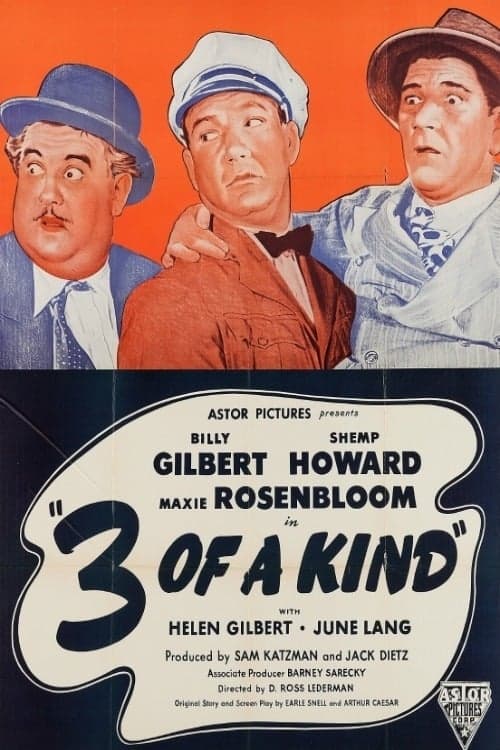
D. Ross Lederman
Runtime
66 minutes
Average Rating
No ratings yetNew Showbiz Analysis
Three of a Kind is a conventional mid-century romantic comedy that follows standard genre clichés. The narrative centers on the domestic lives of vaudeville performers and the formation of a family unit through adoption. The film reinforces the social structures of the 1940s rather than critiquing them. It lacks the intentionality needed to provide multi-layered representation or disrupt established social hierarchies. Ultimately, the production aligns with the era's cinematic standards, prioritizing traditional morality and homogeneous casting over narrative complexity or social diversity.
Category Breakdown
The film does not include any characters with non-binary or transgender identities. It follows the assumption that everyone is straight or cisgender, which was common in 1940s romantic comedies.
The story focuses on vaudeville performers but does not show women challenging traditional gender roles. It likely sticks to the conventional gender roles of the time.
The movie does not indicate a diverse cast or non-white main characters. It reflects the predominantly white casts typical of 1940s studio productions.
The plot emphasizes traditional Western institutions like the nuclear family. It reinforces social cohesion through the cliché of adopting a child.
There is no information available regarding the inclusion of characters with visible or invisible disabilities.
Present on Screen
Limited or Absent
Official Synopsis
Two vaudeville performers adopt the son of an actor friend.
1942
1958

1942

1947
1935
1944
1941
1944
No reviews yet. Be the first to share your thoughts on this movie!
Use the rating form above to leave a star rating and optional review.