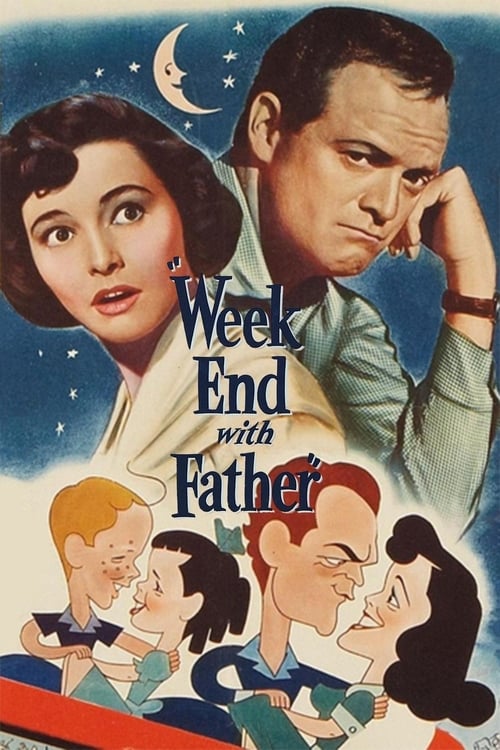
Week-End with Father
1951
No user ratings available yet
Representation score: 1.9 out of 10
Representation Score
Minimal
1952
Director
Christian-Jaque
Runtime
110 minutes
Average Rating
No ratings yetNew Showbiz Analysis
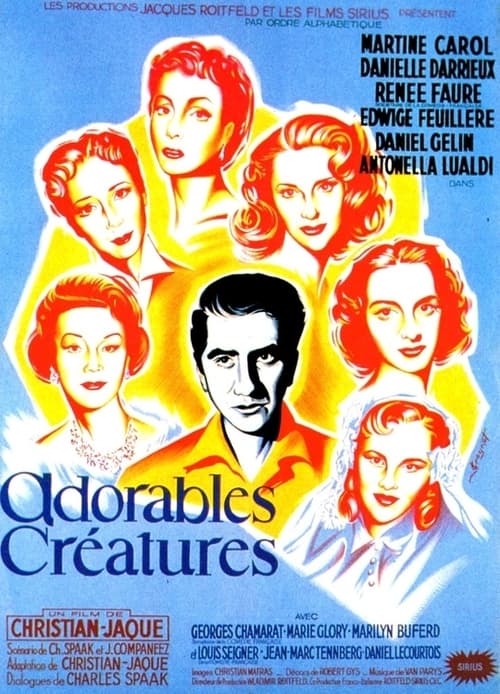
Adorable Creatures is a quintessential mid-century French romantic comedy that adheres to the social and demographic norms of 1952. The plot centers on a young artist's pursuit of a married woman, focusing on courtship and social propriety. The film lacks depth in reflecting multiple aspects of identity, offering a homogeneous cast and a narrative structure that reinforces traditional hierarchies. It functions as lighthearted escapism rather than a tool for social or identity-based critique. While the female lead seeks personal freedom, the film remains rooted in the conventional romantic entanglements and Eurocentric normalcy typical of its era.
Category Breakdown
The film operates within a strictly straight-centered framework. There is no evidence of same-sex relationships or non-cisgender gender identities.
Christine navigates complex marital dynamics and seeks to play a significant role in driving the story. However, the narrative relies on traditional gender clichés rather than challenging established gender hierarchies.
The cast is homogeneous, reflecting a predominantly white, European demographic. The film lacks intentional racial blending or diverse ethnic representation.
The story prioritizes middle-class romantic ideals and traditional social structures. It avoids critiques of Western institutions or progressive moral views.
The narrative focuses exclusively on the romantic and social interactions of the protagonists. There are no characters with visible or invisible disabilities.
Present on Screen
Limited or Absent
Official Synopsis
Andre Noblet, a 21-year-old French artist falls madly in love with Christine, the mother of two children. He tells Chistine he will tell all to her husband and demand her freedom. Christine learns that her husband has been carrying on a romance of his own and they have a meeting.
1951
1964
1940
1967
1954

1947
1953

1992
No reviews yet. Be the first to share your thoughts on this movie!
Use the rating form above to leave a star rating and optional review.