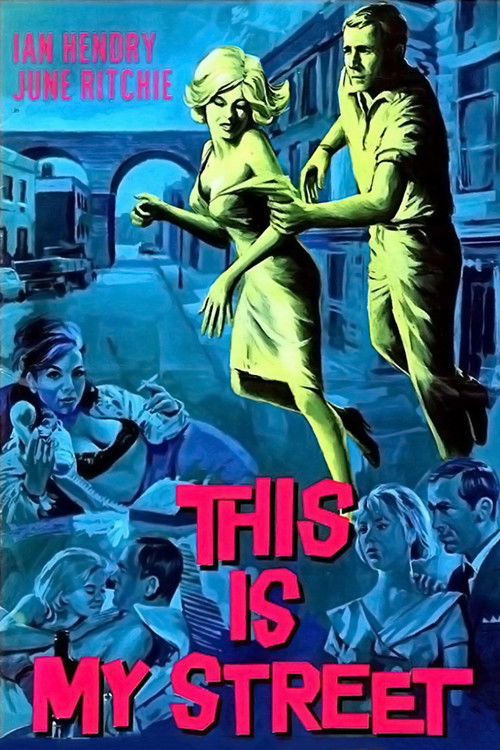
This Is My Street
1964
No user ratings available yet
Representation score: 4.1 out of 10
Representation Score
Limited
1963
Director
Wolf Rilla
Runtime
93 minutes
Average Rating
No ratings yetNew Showbiz Analysis
The film serves as a character study of female autonomy and social tension within an urban subculture. By centering women's ability to drive the story and interpersonal complexity, it offers meaningful gender-centric perspectives. However, the work lacks diversity in its social depictions, adhering to the homogeneous social portrayals typical of 1963 British realism. While the Soho setting hints at unconventional lifestyles, the narrative remains tied to traditional social structures without explicitly challenging broader cultural norms.
Category Breakdown
The film focuses on the lives of individuals in the bohemian Soho district but does not explicitly include characters with LGBTQ+ identities.
The story centers on the lived experiences and interpersonal tensions of two women, challenging traditional male-dominated narratives by making female friendships and jealousy the main plot drivers.
The narrative focuses on a specific duo within a London setting but does not integrate multi-ethnic or diverse racial backgrounds.
The film examines the friction between different social classes, particularly between Soho hostesses and wealthy businessmen, critiquing class hierarchies and traditional marriage stability.
There is no mention of characters navigating physical, sensory, or neurodivergent disabilities within the narrative.
Present on Screen
Limited or Absent
Official Synopsis
Early 1960s realist drama following a day in the lives of two London flatmates. Sylvia Syms and June Ritchie star as Billa and Ginnie, two singletons sharing a London flat who both work as night club hostesses in the same Soho club. Tensions arise when Ginnie becomes romantically entangled with rich married businessman Bob Shelbourne (Edward Judd), causing Billa to become jealous of their relationship.
1964

1961
1969

1953
1965
1973
1953
1960
No reviews yet. Be the first to share your thoughts on this movie!
Use the rating form above to leave a star rating and optional review.