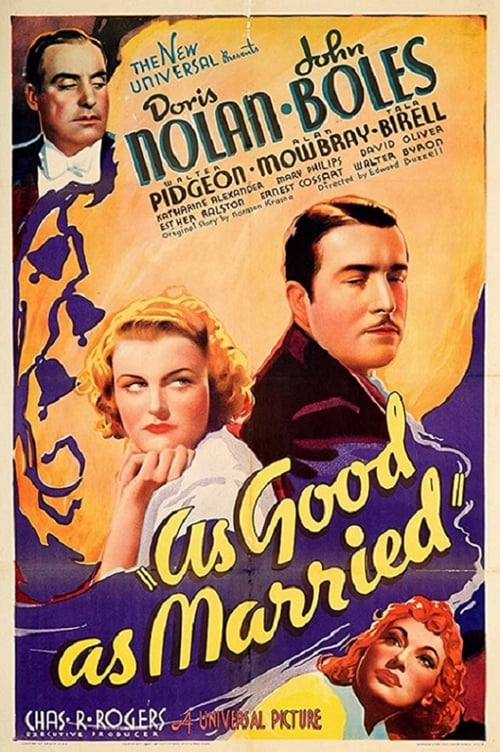
As Good as Married
1937
No user ratings available yet
Representation score: 0.4 out of 10

Representation Score
Minimal
1937
ApprovedDirector
Nick Grindé
Runtime
58 minutes
Average Rating
No ratings yetNew Showbiz Analysis
Public Wedding is a product of the early studio era, following the conventional moral and archetypal structures of the 1930s. The narrative centers on resolving misunderstandings to restore lost fortunes. While the film lacks significant diversity in terms of race, culture, or LGBTQ+ representation, it offers a minor instance of female empowerment through the protagonist's active role in managing her husband's career. Overall, the film operates as a traditional period comedy, reinforcing the social and romantic hierarchies of its time without attempting to challenge them.
Category Breakdown
The film follows a typical heterosexual relationship storyline. There are no representations of LGBTQ+ identities or same-sex relationships.
Flip Lane shows unexpected influence by managing her husband's career. However, this empowerment stays within traditional domestic and romantic roles.
The story lacks indications of a racially diverse cast. It seems to follow the homogeneous casting practices of the 1930s.
The story revolves around traditional carnival themes, focusing on restoring lost fortunes without critiquing societal institutions.
The film does not include any characters with visible or invisible disabilities.
Present on Screen
Limited or Absent
Official Synopsis
The operators of a bankrupt carnival sideshow hope to restore their fallen fortunes by staging a fake 'public wedding' in the mouth of their unprofitable giant whale. But the intended 'bridegroom' absconds with the proceeds, arranging a substitute. The bride, Flip Lane (Jane Wyman), much to her surprise, finds herself really married to a handsome stranger, whose career as an artist she decides to manage, much to his dismay.
1937

1938

1937
1937
1940

1938

1927

1940
No reviews yet. Be the first to share your thoughts on this movie!
Use the rating form above to leave a star rating and optional review.