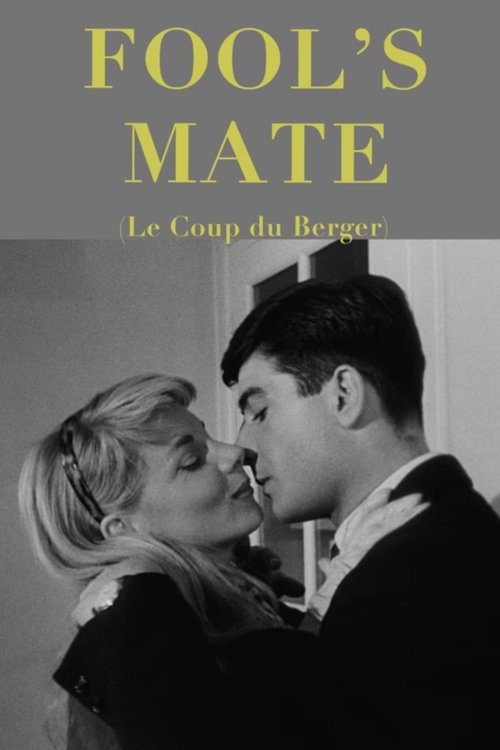
Fool’s Mate
1956
No user ratings available yet
Representation score: 4.2 out of 10

Representation Score
Fair
1961
TV-14Director
Philippe de Broca
Runtime
95 minutes
Average Rating
No ratings yetNew Showbiz Analysis
Philippe de Broca’s film explores the instability of mid-century social contracts by focusing on the fragmentation of domestic units. It challenges the era's standard of the submissive wife by granting female characters economic and social power. However, the film lacks diverse representation. The narrative remains confined to a homogeneous social circle and a strictly heterosexual framework, offering little representation for racial or LGBTQ+ identities. Ultimately, the film examines individual autonomy versus bourgeois institutions, providing a progressive perspective on social structures while remaining limited in its demographic scope.
Category Breakdown
The story focuses on traditional romantic relationships and infidelity. It explores non-traditional relationship structures but does not include queer identities or non-binary gender expressions.
The film challenges traditional gender roles by centering on Claire, a woman who exercises significant influence through her extra-marital choices. Madeleine's role as a wealthy fashion designer further disrupts the typical male breadwinner dynamic.
The narrative appears to focus on a homogeneous social circle. There is no evidence of racial diversity or significant non-white casting within the primary character arcs.
The film critiques the sanctity of the traditional family unit through its focus on moral relativism. It prioritizes personal impulses over marital duties, suggesting a move toward secular, subjective morality.
There is no information available regarding the depiction of physical or neurodivergent disabilities within the film's character roster.
Present on Screen
Limited or Absent
Official Synopsis
Claire is a young mother and married to Georges, but she is also having an affair with bachelor Antoine, who is being kept by her good friend Madeleine, a wealthy fashion designer. But the meetings at Antoine's apartment, five afternoons a week, come to a halt when their partners learn the truth.
1956
1976
1956
1968
1992
1950
1942
2005
No reviews yet. Be the first to share your thoughts on this movie!
Use the rating form above to leave a star rating and optional review.