
A Bullet for the General
1967
No user ratings available yet
Representation score: 2.9 out of 10
Representation Score
Limited
1971
PGDirector
Sergio Leone
Runtime
157 minutes
Average Rating
No ratings yetNew Showbiz Analysis
Sergio Leone's film dismantles the Western myth by replacing moral clarity with cynical drama. It excels in cultural representation by presenting a non-binary view of morality where necessity trumps truth. The film effectively uses its Mexican setting to explore post-colonial tensions and class struggles. However, the film remains constrained by its focus on traditional machismo and a lack of diverse identity representation. The narrative structure centers on male-driven conflict and straight-centered dynamics, leaving little room for LGBTQ+ or disability-focused stories.
Category Breakdown
The film focuses solely on heterosexual relationships and traditional male roles. There are no depictions of individuals who identify as LGBTQ+ or have non-cisgender identities.
The story emphasizes male-dominated violence and traditional masculine roles. Although Emmanuelle plays a key role in the power dynamics, her influence is often shaped by her interactions with men.
Set during the Mexican Revolution, the film shifts away from the typical homogeneity of Westerns. It explores conflicts between local communities and foreign entities.
The film provides a nuanced critique of institutional stability and the myth of the noble revolution. It portrays political movements as chaotic, transactional, and driven by survival.
There are no prominent depictions of individuals with visible or invisible disabilities that play central roles in the narrative.
Present on Screen
Limited or Absent
Official Synopsis
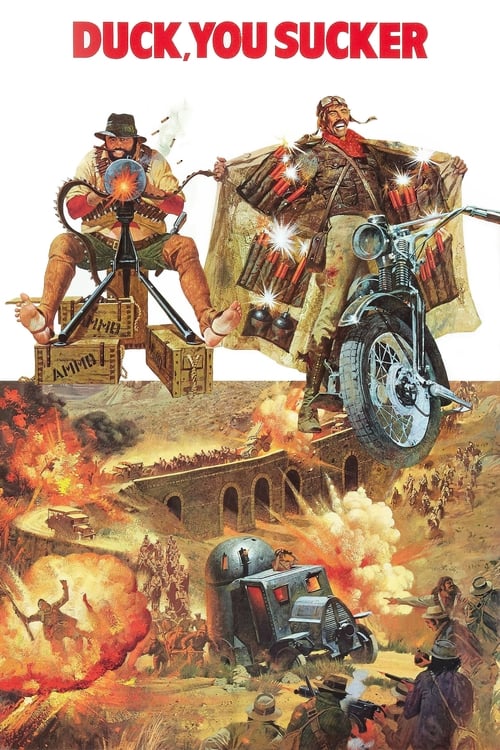
At the beginning of the 1913 Mexican Revolution, greedy bandit Juan Miranda and idealist John H. Mallory, an Irish Republican Army explosives expert on the lam from the British, fall in with a band of revolutionaries plotting to strike a national bank. When it turns out that the government has been using the bank as a hiding place for illegally detained political prisoners -- who are freed by the blast -- Miranda becomes a revolutionary hero against his will.
1967
1968
1969

1939

1971

1952
1967
1954
No reviews yet. Be the first to share your thoughts on this movie!
Use the rating form above to leave a star rating and optional review.