
Under the Olive Tree
1950
No user ratings available yet
Representation score: 5.5 out of 10
Representation Score
Fair
1947
Director
Giuseppe De Santis
Runtime
89 minutes
Average Rating
No ratings yetNew Showbiz Analysis
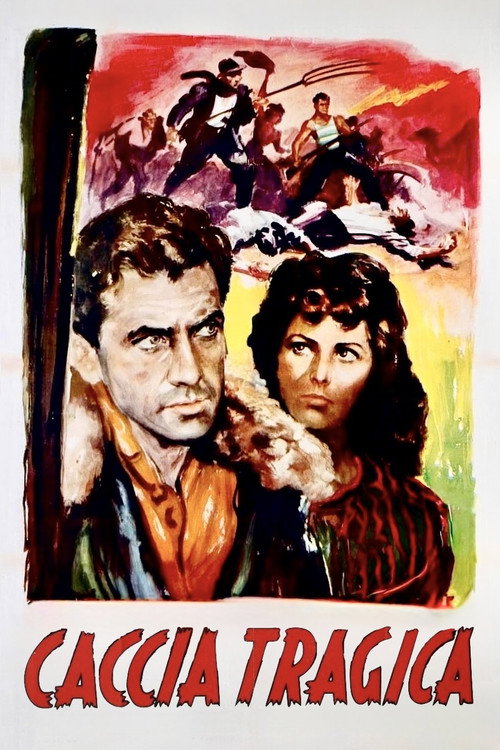
Tragic Hunt is an Italian Neorealist film that prioritizes social and economic critique over identity politics. It examines the tension between the working class and systemic instability during the post-war era. While the film lacks broad representation of diverse identities, it effectively uses the struggles of a small agricultural cooperative to question the stability of mid-century economic systems. However, it adheres to the demographic and social norms of its time, reflecting a more homogeneous Mediterranean context.
Category Breakdown
The story centers around a newlywed couple and an accountant, with no indication of LGBTQ+ identities or queer narratives.
Giovanna is a prominent female character who provides a moral compass amid the chaos caused by male-dominated forces.
The film depicts the homogeneous European society of post-war Italy, with no evidence of a diverse cast or non-white characters.
It critiques the institutional and economic structures through the lens of an agricultural cooperative, highlighting the fragility of capitalism and social order during reconstruction.
There are no characters with visible or invisible disabilities mentioned in the story.
Present on Screen
Limited or Absent
Official Synopsis
Immediately after the war, bandits attack a truck that is transporting newlyweds Michele and Giovanna and the accountant of an agricultural cooperative charged with bringing four million lire into office.
1950

1949
1965

1950
1964
1949
1946

1945
No reviews yet. Be the first to share your thoughts on this movie!
Use the rating form above to leave a star rating and optional review.