
The Serpent's Egg
1977
No user ratings available yet
Representation score: 6.5 out of 10
Representation Score
Good
1978
Director
Rainer Werner Fassbinder
Runtime
117 minutes
Average Rating
No ratings yetNew Showbiz Analysis
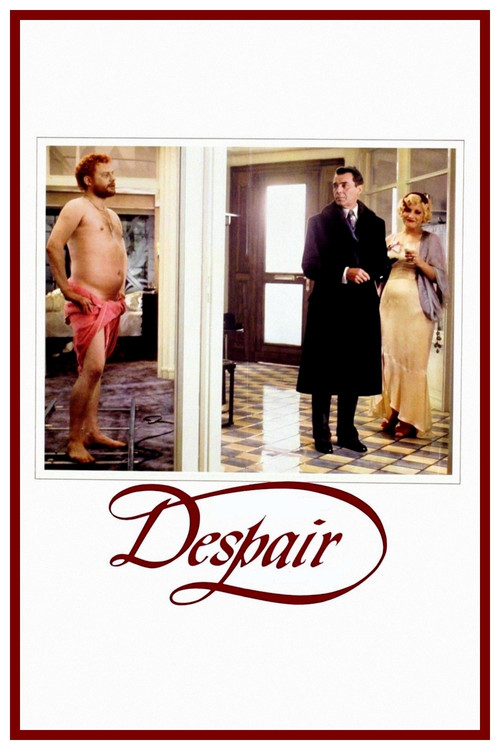
Rainer Werner Fassbinder's Despair is a postmodern deconstruction of identity that prioritizes intellectual subversion over traditional representation. While it lacks diverse casting or explicit queer narratives, it successfully dismantles patriarchal structures and moral certainties. The film's strength lies in its refusal to conform to social norms, using the protagonist's decline to critique the perceived inauthenticity of societal constructs. It replaces stable archetypes with psychological fragmentation. However, the work remains limited by its specific historical context and its tendency to use psychological instability as a philosophical tool rather than a lived experience.
Category Breakdown
The film doesn't explicitly feature LGBTQ+ identities or stories focused on queer orientation. Instead, it centers on the protagonist's mental breakdown within a narrow existential framework.
Masculinity is portrayed as unstable and prone to failure. The film challenges traditional domestic hierarchies by showing the protagonist's emotional volatility when confronted with his wife's strong influence.
Set in 1930s Berlin, the film focuses on a Russian immigrant protagonist. However, it emphasizes his sense of alienation rather than showcasing a wide range of ethnic backgrounds.
The film critiques Western institutional stability by breaking down traditional values such as family and social order, presenting them as fragile and artificial.
The film examines obsession and dissociation through an existentialist perspective. These psychological conditions serve the character study rather than representing actual disabilities.
Present on Screen
Limited or Absent
Official Synopsis
Berlin, 1930, during the rise of Nazism. Hermann Hermann, a Russian emigrant and chocolate manufacturer, married to the capricious Lydia, loses his temper more and more every day when dealing with his workers and other businessmen; until he meets Felix, a vagrant, who seems to be physically identical to him; a disconcerting fact that leads Hermann Hermann to plot a particular way out of a fake world he actually hates.
1977

1976
1957

1953

2003

1976

1974

1998
No reviews yet. Be the first to share your thoughts on this movie!
Use the rating form above to leave a star rating and optional review.